The Great Silk Road: History of Ancient Trade Routes Through Uzbekistan
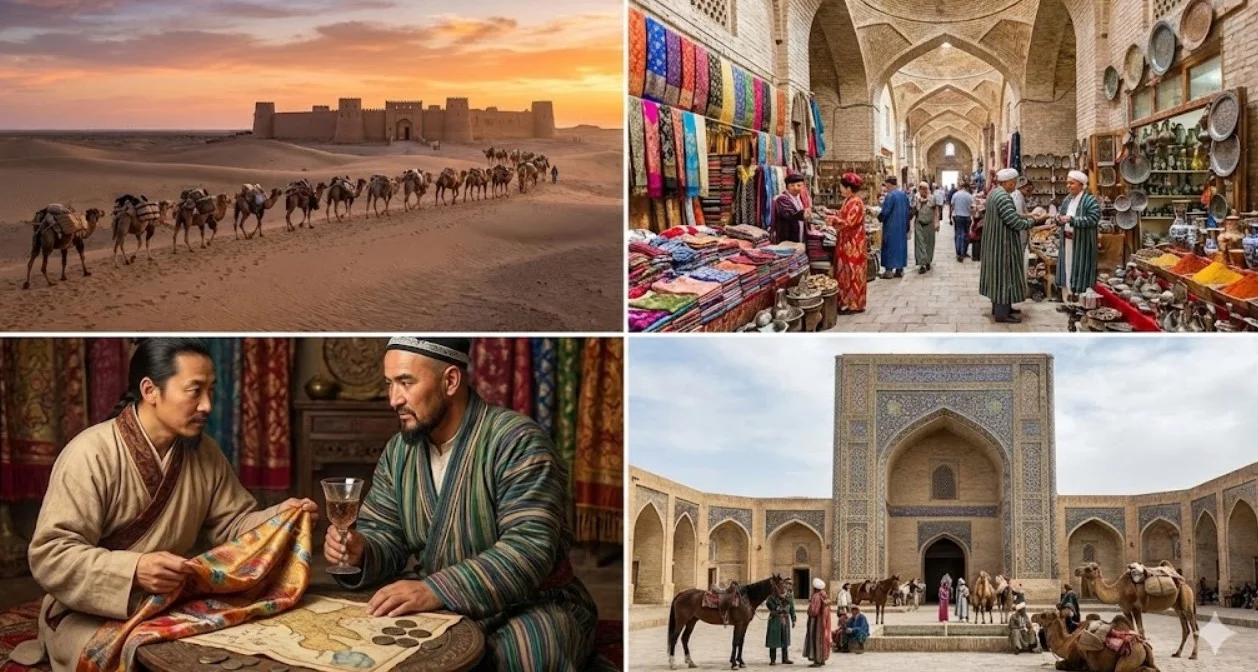
For over two millennia, the Great Silk Road connected East and West, creating the world's most legendary trade network. At its heart lay the cities of Uzbekistan – Samarkand, Bukhara, and Khiva – where merchants, scholars, and travelers exchanged not just goods, but ideas that shaped human civilization.
Today, walking through the ancient bazaars and caravanserais of Uzbekistan, you're literally stepping on the same stones that Marco Polo, Alexander the Great, and countless merchants traveled. Let us take you on a journey through time.
What Was the Silk Road?
Despite its name, the Silk Road was never a single road, nor was it exclusively about silk. It was a vast network of trade routes spanning over 6,400 kilometers (4,000 miles), connecting China to the Mediterranean Sea. The term "Silk Road" was coined by German geographer Ferdinand von Richthofen in 1877.
The network consisted of both overland and maritime routes, carrying:
- From East to West: Silk, spices, tea, porcelain, jade, paper, gunpowder
- From West to East: Gold, silver, glass, textiles, horses, grapes, wool
- Ideas: Buddhism, Islam, Christianity, scientific knowledge, art, music
Uzbekistan: The Crossroads of Civilizations
Uzbekistan's position made it the most crucial hub of the Silk Road. Merchants traveling from China to Europe had to pass through the oasis cities of Central Asia – there was simply no other way.
"Samarkand is the center of the world. Everything you need can be found here – goods from China, India, Persia, and the steppes." - Ibn Battuta, 14th-century traveler
Samarkand: The Pearl of the Silk Road
Samarkand (known as Maracanda in ancient times) was already a thriving city when Alexander the Great arrived in 329 BC. He reportedly said: "Everything I have heard about Maracanda is true, except that it is more beautiful than I imagined."
Key Silk Road sites in Samarkand:
- Registan Square – The ancient commercial heart where merchants gathered
- Afrasiab – The original city with frescoes depicting Silk Road diplomacy
- Bibi-Khanym Mosque – Built to impress travelers entering the city
- Siab Bazaar – Continuing 2,500 years of trading tradition
Bukhara: The City of Scholars
Bukhara was not just a trading post – it was the intellectual capital of the Islamic world. At its peak, the city had over 360 mosques and 100 madrasahs. The great scholars Ibn Sina (Avicenna) and Al-Bukhari studied here.
Silk Road highlights in Bukhara:
- Trading Domes (Toki) – Covered bazaars for specific goods
- Poi Kalyan Complex – Where travelers prayed before journeys
- Ark Fortress – Where rulers received foreign envoys
- Caravanserais – Ancient "hotels" for merchants
Khiva: The Desert Fortress
Khiva was the last major stop before the treacherous crossing of the Karakum Desert. Merchants would rest, trade, and prepare for the journey ahead – or celebrate surviving the desert crossing from the west.
Timeline of the Silk Road
Understanding the key periods helps appreciate what you see today:
- 2nd Century BC: Official opening when Chinese Emperor Wu sends envoys west
- 1st-3rd Century AD: Height of trade between Rome and China
- 6th-8th Century: Rise of Sogdian merchants (ancestors of Uzbeks)
- 8th Century: Arab conquest brings Islam along the route
- 13th Century: Mongol Empire creates "Pax Mongolica" – safest period for travel
- 14th Century: Timur (Tamerlane) makes Samarkand the world's richest city
- 15th Century: Maritime routes begin competing with overland trade
- 17th Century: Decline as sea trade dominates
The Sogdians: Forgotten Masters of the Silk Road
While Chinese silk and Roman gold are famous, the real heroes of the Silk Road were the Sogdians – the ancient inhabitants of present-day Uzbekistan. They dominated Silk Road trade for over 1,000 years.
Sogdian contributions:
- Created the first international merchant network
- Developed the script that became the basis for Mongolian and Manchu writing
- Spread Buddhism from India to China
- Established trading colonies from Korea to the Black Sea
What the Silk Road Brought to the World
The Silk Road changed human history far beyond trade:
Technology Transfer
- Paper – From China to the world (arrived in Samarkand in 751 AD)
- Gunpowder – Changed warfare forever
- Printing – Revolutionized knowledge sharing
- Compass – Enabled future maritime exploration
Food Exchange
- Grapes and wine from Persia to China
- Oranges and peaches from China to the West
- Spices from India to Europe
- Noodles (debated origin) between East and West
Experience the Silk Road Today
Visiting Uzbekistan allows you to walk in the footsteps of ancient traders. Our recommended Silk Road experiences:
- Stay in a former caravanserai – Some are now boutique hotels
- Shop in the trading domes – Buy crafts where silk was once traded
- Visit paper-making workshops – See traditional methods unchanged for centuries
- Explore the old city walls – Imagine the caravans arriving
- Taste Silk Road cuisine – Foods that travelers ate centuries ago
Planning Your Silk Road Journey
The classic Silk Road route through Uzbekistan follows the ancient path:
- Tashkent – Modern gateway (2-3 days)
- Samarkand – The pearl of the Silk Road (3-4 days)
- Bukhara – Living museum of the Silk Road (2-3 days)
- Khiva – Desert fortress (2 days)
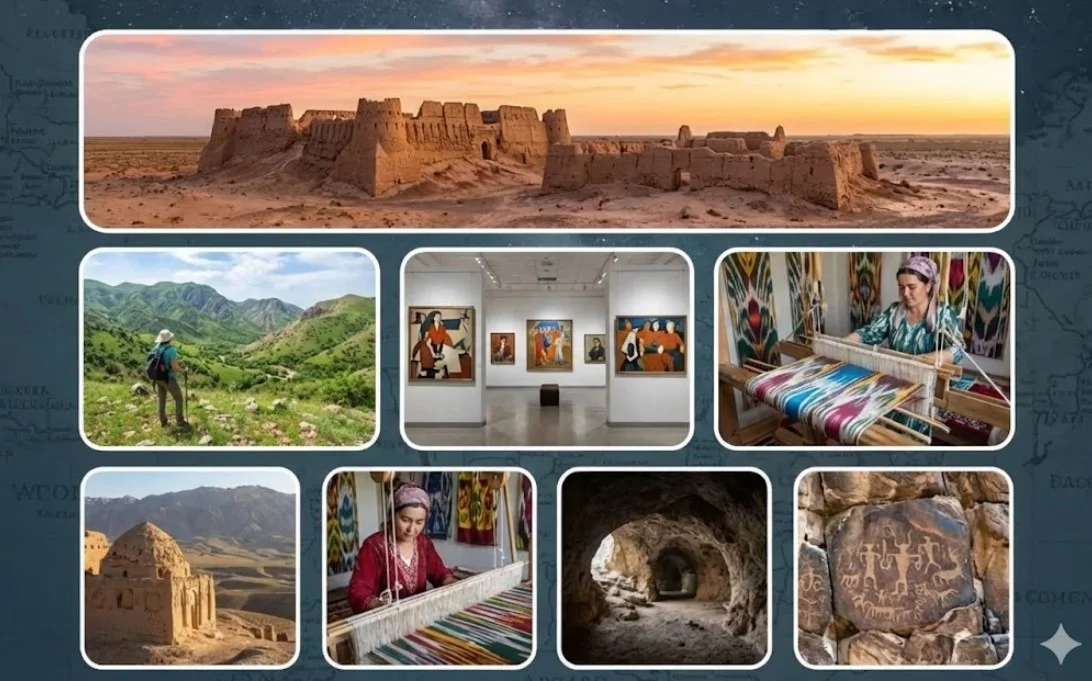
For the complete experience, consider extending to the ancient fortresses of Karakalpakstan or the yurt camps in the Kyzylkum Desert – both on historic caravan routes.
Explore the Silk Road with Local Experts
Our family has been welcoming travelers to Samarkand for generations. Let us share the stories and secrets of the ancient Silk Road with you.
Plan Your Silk Road JourneyShare this article