

Top Things to Do in Samarkand: 2026 Guide | Jahongir Travel
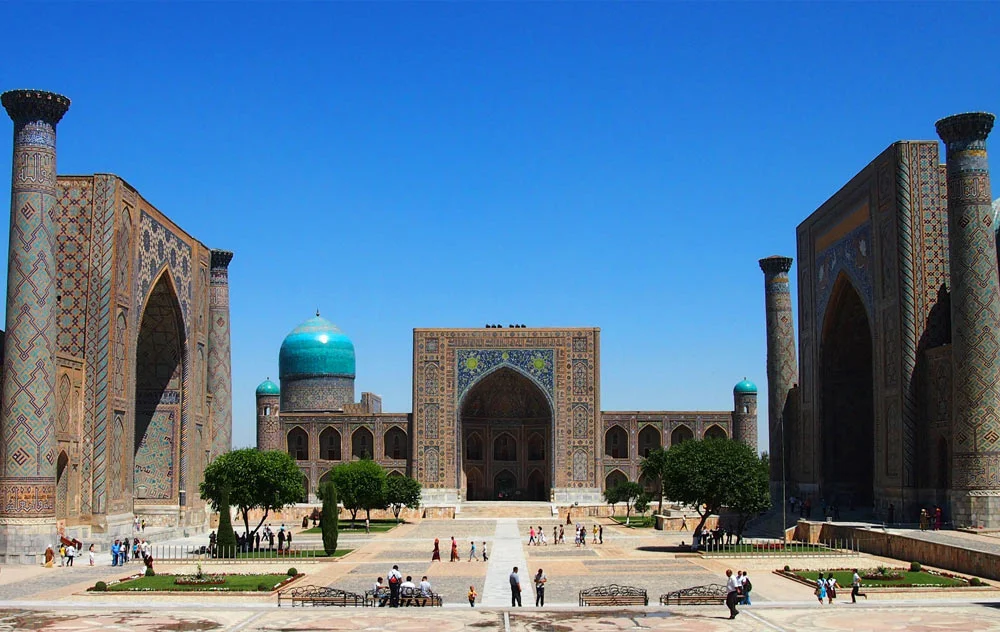
Samarkand is the reason most travellers come to Uzbekistan — and it rarely disappoints. This guide covers the things to do in Samarkand that matter most, what to skip, and how to see them efficiently, written from the perspective of a local tour operator based in the city.
Why Visit Samarkand?
Samarkand has been inhabited for more than 2,750 years. It sat at the crossroads of the ancient Silk Road, absorbed Alexander the Great, was rebuilt by Timur (Tamerlane) into the capital of a 14th-century empire, and today preserves the most concentrated set of Timurid monuments anywhere in the world. UNESCO lists the old city as a World Heritage Site for a reason: the scale of the turquoise domes, the tilework, and the sheer density of history have almost no parallel in Central Asia.
For most travellers, two or three days here is the highlight of a trip to Uzbekistan. The city is compact, walkable in the old quarter, and easy to combine with Bukhara and Khiva on a classic Silk Road route.
Top Attractions in Samarkand
There are dozens of historic sites in Samarkand, but five account for the vast majority of what visitors remember. If your time is limited, prioritise these.
Registan Square
Registan is the postcard of Samarkand and the one monument you cannot skip. Three madrasahs — Ulugh Beg (1420), Sher-Dor (1636) and Tilya-Kori (1660) — face a central plaza, each with a different style of tilework and geometry. Go twice if you can: once by day for the tilework detail, once at night when the facades are illuminated.
Insider tip: the evening light-and-sound show runs most nights in season; check the schedule locally rather than relying on travel blogs. If you want a single visit that covers Registan plus the other major monuments with historical context in one day, our guided Samarkand city tour handles the logistics and buying entry tickets (entrance fees paid on the day).
Shah-i-Zinda
Shah-i-Zinda is a narrow avenue of 11 mausoleums on the northern edge of the old city. The name means "Living King" — a reference to a legend that a cousin of the Prophet Muhammad, Qusam ibn Abbas, is buried here. Whether or not you care about the legend, the tilework inside the mausoleums is the finest in Uzbekistan: cobalt, turquoise, gold-leaf calligraphy, all at arm's length.
Best time: early morning, before tour groups arrive. The light is softer and the corridors are empty.
Gur-e-Amir Mausoleum
Gur-e-Amir is Timur's tomb. The exterior is striking — a fluted turquoise dome rising above an unassuming neighbourhood — but the inside is the draw: a gilded interior with an 18-metre ceiling, Timur's black-jade cenotaph on the floor, and surrounding tombs of his sons and grandsons. It's a small building, so 20–30 minutes is enough, but it's worth slowing down for.
Bibi-Khanym Mosque
Commissioned by Timur after his campaign in India and named for his favourite wife, Bibi-Khanym was the largest mosque in the Islamic world when it was finished in 1404. Large parts collapsed over the centuries and what you see today is a mix of original 14th-century walls and 20th-century restoration, but the scale still impresses: the entrance portal alone is over 40 metres high.
Spend 30–40 minutes here; pair it with Siab Bazaar next door.
Siab Bazaar
Siab is where Samarkand stops being a museum and starts being a city. It's the main food market, open every day, with piles of dried fruit, nuts, spices, fresh non (Uzbek bread), and an entire section for sweets. Samarkandi non is stamped with a signature pattern and is considered the best bread in Uzbekistan — worth buying one to eat warm on the spot.
Pro tip: go hungry. The bakers offer samples; a few vendors will make you tea.
For a broader trip-planning view — best time to visit, where to stay, getting around, combining cities — see our full Samarkand travel guide.
Hidden Gems in Samarkand
The five monuments above cover maybe 70% of what tour groups see. If you have more time or want a quieter visit, look beyond the standard route. Afrasiab — the ruins of the pre-Timurid city just north of the modern centre — houses 7th-century frescoes in its museum that depict Silk Road diplomacy. Ulugh Beg's 15th-century observatory, on a hill outside town, is where a Timurid prince produced the most accurate star catalogue of the medieval world. And the historic Jewish Quarter near Siab Bazaar holds the Gumbaz Synagogue, still active after 2,500 years of Jewish presence in the city.
For a longer list and practical directions, see our guide to 10 hidden gems in Samarkand.
How to Explore Samarkand Efficiently
The five headline monuments are all within 2–3 km of each other in the old quarter, so a full day on foot (with one taxi) is realistic for most visitors. A practical schedule:
- Morning (8:30–11:30): Shah-i-Zinda → Bibi-Khanym → Siab Bazaar (walkable).
- Lunch break at a nearby chaikhana.
- Afternoon (13:30–16:30): Gur-e-Amir → Registan (taxi between, 10 minutes).
- Evening: return to Registan for the illuminated facade.
Buy entry tickets at each site (cards accepted at Registan and Gur-e-Amir; cash elsewhere). Dress modestly for Bibi-Khanym and Shah-i-Zinda — shoulders and knees covered. Comfortable shoes matter; the old stonework is uneven.
Best time to visit: Spring (April–May) and autumn (September–October) are ideal for exploring Samarkand comfortably. Summers can be very hot, especially in the afternoon, while winters are quieter but colder.
Getting around: Most major attractions are relatively close to each other, but distances can still be tiring on foot. A guided tour or private driver helps you cover more places efficiently, especially if you only have one day.
If you're deciding between Samarkand and its Silk Road neighbour, see our comparison: Samarkand vs Bukhara — which to visit.
Is a Guided Tour Worth It?
Honest answer: it depends on what you want.
Go independent if you've read up on the history, you're comfortable with taxi negotiation and ticket queues, and you want to linger at your own pace. The monuments are well signposted in English, and the old quarter is safe and easy to navigate.
Go with a local guide if you have one day and want all five headline monuments in a logical sequence; or you want the context — who Ulugh Beg was, why the Sher-Dor Madrasah breaks Islamic iconographic rules, what the tilework inscriptions actually say; or you'd rather skip logistics and focus on the experience. A guide also opens small doors: access to parts of monuments off the standard path, introductions to artisans at Siab, meals at places that don't show up on review sites.
If you're short on time or visiting Samarkand for the first time, a guided tour can make a big difference. You won't just see the monuments — you'll understand the stories behind them, from the legacy of Tamerlane to the significance of each architectural detail.
Samarkand is deep. The monuments are beautiful even without context, but they become remarkable when someone explains what you're looking at.
Want to see all these highlights in a single day?
Our full-day Samarkand City Tour covers Registan, Gur-e-Amir, Shah-i-Zinda, Bibi-Khanym and Siab Bazaar with a local guide.
Book the Samarkand City Tour → · See all tours from Samarkand →Related Articles
Odil has been guiding travellers through Uzbekistan's Silk Road cities since 2009. Born in Samarkand, he specialises in cultural heritage tours, homestay experiences, and off-the-beaten-path adventures in the Nuratau Mountains. Jahongir Travel is his family-run tour operator based in Samarkand. Learn more about us.