

Samarkand vs Bukhara: Which City Should You Visit?
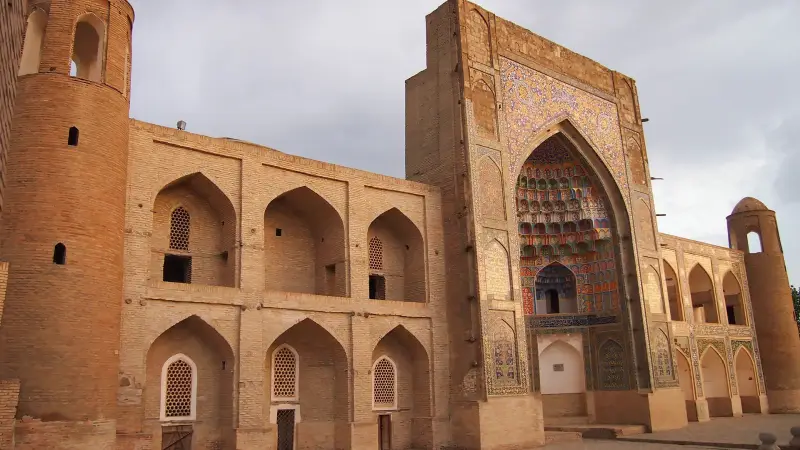
Every traveller planning a trip to Uzbekistan faces the same dilemma: if I only have time for one city, should it be Samarkand or Bukhara? I have been asked this question hundreds of times. My honest answer is always: go to both. But if you truly cannot, here is the most honest comparison I can give you.
The Short Version
Samarkand wins on individual monuments. The Registan is the most visually overwhelming architectural ensemble in Central Asia. If you want a single image burned into memory, Samarkand provides it.
Bukhara wins on atmosphere and wholeness. It is a living medieval city, not a showcase of reconstructed monuments. Walking its old streets, you feel like you have stepped into a world that genuinely survived. For many travellers, it is the more emotionally affecting experience.
The ideal solution — and one that requires only 4–5 days total — is to visit both. They are connected by a 90-minute high-speed train.
Architecture: Spectacular vs Authentic
Samarkand
Samarkand's monuments are the most photographed in Uzbekistan for good reason. The Registan — three madrasas around a central square — is an architectural statement of extraordinary power. The tilework is the richest blues and greens you will see outside of Persia.
But here is the honest caveat: much of what you see has been heavily restored by Soviet-era architects. Walls that were crumbling in the 1960s now look almost new. Purists find this jarring. The restoration work is excellent, but it sometimes feels more like a recreation than a survival.
Bukhara
Bukhara's old city is more genuinely intact. The Ismail Samani Mausoleum (892 AD) survived the Mongol invasion by being buried under sand — what you see is almost entirely original 9th-century brickwork. The Kalon Minaret (1127) survived because Genghis Khan was reportedly so impressed he ordered it spared. These monuments have not been rebuilt; they have aged.
Bukhara also has more architectural diversity: 140 protected monuments spread across a walkable old city. Samarkand has fewer major sites, though each is individually more grand.
Winner: Samarkand for individual grandeur. Bukhara for authenticity and density.
Atmosphere: City vs Museum
Samarkand
Modern Samarkand is a mid-sized Central Asian city with around 500,000 people. The tourist zone around the major monuments is well-maintained but somewhat separate from everyday Uzbek life. Between the sites, you travel through ordinary urban streets. The Siab Bazaar is genuinely local, but most of the hospitality infrastructure caters primarily to tour groups.
Bukhara
Bukhara's old city is compact and its tourist infrastructure is woven into the old fabric rather than built alongside it. The courtyard hotels occupy actual historic caravanserais and merchant houses. The restaurants are around the medieval Lyabi-Hauz pool and the ancient trading domes. Walking through the old city at dusk, you will pass families sitting outside, old men playing backgammon, women shopping — ordinary life happening in genuinely medieval streets.
Winner: Bukhara, clearly, for atmosphere and sense of place.
Food
Both cities serve excellent Uzbek food. Samarkand is particularly famous for its plov (the rice pilaf dish that is effectively the national dish, each city with its own recipe). The Samarkand version uses carrots, lamb, chickpeas, and sometimes quince. The best is eaten at a local chaikhana, not in tourist restaurants.
Bukhara has better options for lingering over meals: the courtyard restaurants around Lyabi-Hauz are genuinely pleasant in the evenings, and there is a slightly wider variety of cuisine available. The local speciality is dimlama (slow-cooked meat and vegetables) and manti (steamed dumplings with lamb and onion).
Winner: Draw — Samarkand for plov, Bukhara for variety and evening ambience.
Practicalities: Getting Around and Costs
Samarkand is slightly easier for first-time visitors: the main sites are concentrated and taxis are straightforward. Bukhara's old city is best explored on foot — a blessing, since it means you discover things by wandering.
Costs are comparable. Accommodation options are slightly more varied and charming in Bukhara, where converted historic houses offer real character. Samarkand has more options at the higher end (international-standard hotels near the Registan).
Day Trips
From Samarkand
- Shahrisabz (90 km) — Timur's birthplace and Ak-Saray ruins
- Urgut Bazaar and Konigil Paper Mill (30 km)
- Nuratau Mountains and Nurata town (130 km)
- Aydarkul Lake and yurt camp (170 km)
From Bukhara
- Bahouddin Naqshband Complex (12 km)
- Chashma-Ayub and water museum
- Nurata oasis and Nuratau foothills (180 km)
- Kyzylkum Desert camel excursions
Winner: Samarkand for day trip variety. Bukhara's proximity to the Naqshband complex is a significant spiritual draw.
The Verdict
If you have a week, visit both. Take the morning train from Samarkand to Bukhara after two days — you will be on the train before most tour groups have finished breakfast, and in Bukhara by lunchtime.
If you truly have time for only one:
- Choose Samarkand if you are most interested in: the most dramatic monuments, the Registan, Timur's legacy, being in the most famous Silk Road city.
- Choose Bukhara if you are most interested in: authentic atmosphere, feeling genuinely inside the medieval world, photography of intact streets, quieter exploration.
In 20 years of guiding, I have met very few travellers who regret visiting either city. I have met many who wish they had visited both.
Ready to see both cities?
We run private day tours from Samarkand and from Bukhara, plus a desert yurt-camp route that links the two.
Tours from Samarkand → · Tours from Bukhara → · Samarkand to Bukhara via a yurt camp →Odil has been guiding travellers through Uzbekistan's Silk Road cities since 2009. Born in Samarkand, he specialises in cultural heritage tours, homestay experiences, and off-the-beaten-path adventures in the Nuratau Mountains. Jahongir Travel is his family-run tour operator based in Samarkand. Learn more about us.