

One Week in Uzbekistan: The Perfect 7-Day Itinerary
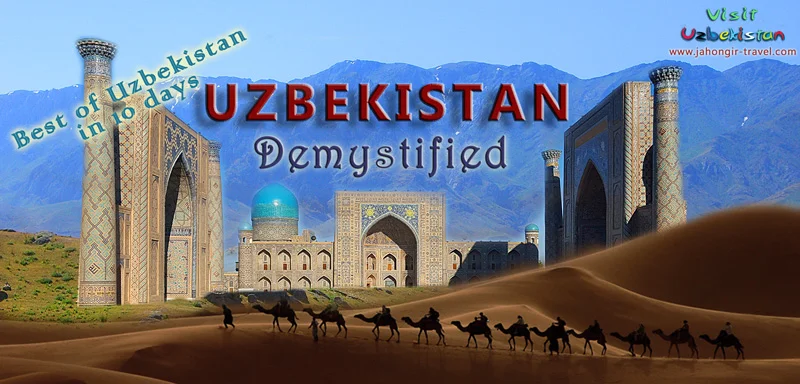
Seven days is enough to see the three great cities of the Uzbek Silk Road — Samarkand, Bukhara, and Khiva — without ever feeling rushed. You will have time for the iconic monuments and time to sit in teahouses, wander through bazaars, and actually talk to people.
This is the itinerary I recommend most often to independent travellers who ask where to start. It is efficient, it covers the essential sights, and it leaves room for the unexpected moments that make travel memorable.
Before You Go: Practical Basics
Uzbekistan nationals of around 90 countries can enter visa-free for 30 days, including citizens of the EU, UK, USA, Canada, Australia, Japan and South Korea. Check the latest list on the official government portal before travel, as the visa-free programme expanded significantly in recent years.
The best way to travel between cities is by the Afrosiyob high-speed train (Tashkent–Samarkand in 2 hours, Samarkand–Bukhara in 1h20). From Bukhara to Khiva, a shared taxi or private transfer is most practical (about 5 hours through the desert).
Fly into Tashkent on an evening flight, spend the night, and take the first morning train to Samarkand. Your adventure starts immediately.
Days 1–2: Samarkand
Day 1 — Registan and the Blue-Domed City
Arrive by train in the morning. Check into your hotel and walk straight to the Registan Square. Give yourself at least two hours here. Go inside each madrasa: Ulugh Beg (1420), Sher-Dor (1636), Tilla-Kari (1660). The golden interior of Tilla-Kari is extraordinary.
In the afternoon, walk north to Bibi-Khanym Mosque and the Siab Bazaar behind it. Buy spices, dried mulberries, and a round of Samarkand non bread still warm from the tandoor. The bazaar closes around 5pm.
Evening: the optional sound and light show at Registan runs in summer (May–September) — book tickets in advance.
Day 2 — Timur's Tombs and the Ancient City
Morning at Gur-e-Amir Mausoleum (Timur's tomb) and the adjacent Rukhabad Mausoleum. Then walk or taxi to Shah-i-Zinda Necropolis — allow 90 minutes to absorb the extraordinary tilework along the avenue of 14th-century tombs.
Afternoon: the Afrosiab Museum for the 7th-century Sogdian frescoes, then up to the Ulugh Beg Observatory for sunset views over the city. In the evening, try the famous Samarkand plov (rice pilaf) at a local chaikhana.
Days 3–4: Bukhara
Take the morning train to Bukhara (1h20 on the high-speed). Bukhara is the most complete medieval city in Central Asia — more than 140 protected architectural monuments within the old city alone.
Day 3 — The Old City on Foot
Bukhara is made for walking. Start at the Kalon Minaret (1127), the tower so impressive that Genghis Khan reportedly ordered his troops to bow before it rather than destroy it. The adjacent Kalon Mosque and Mir-i-Arab Madrasa opposite form one of the most harmonious architectural ensembles in the world.
Wander through the covered trading domes (toki) — the Hat Sellers Dome, the Jewellers Dome, the Money Changers Dome — still functioning as markets for silk and ceramics. Lunch at any of the courtyard restaurants around the Lyabi-Hauz pool.
Afternoon: the Bolo-Hauz Mosque, Ark Fortress (the ancient citadel, inhabited for 1,500 years), and the Ismail Samani Mausoleum — the oldest surviving monument in Central Asia, built in 892 AD.
Day 4 — Spiritual Bukhara and Surroundings
Morning: the Chor-Minor mosque (its four unique minarets are Bukhara's most photogenic sight), then the Zindan (old prison) and Abdulaziz Khan Madrasa. In the afternoon, take a short taxi to the Bahouddin Naqshband Complex — the tomb of the 14th-century mystic who founded the Naqshbandi Sufi order, still a major pilgrimage site.
Evening: Bukhara has a lively evening restaurant scene around Lyabi-Hauz. Try shashlyk, manti dumplings, and the local bread with regional honey.
Days 5–6: Khiva
The road from Bukhara to Khiva crosses the Kyzylkum Desert — 5 hours through flat, hypnotic landscape. Hire a private car or join a shared taxi. The drive itself is part of the experience.
Day 5 — Inside the Walled City
Khiva's Ichan-Kala (inner walled city) is a UNESCO World Heritage Site and the most perfectly preserved medieval Islamic city in the world. Unlike Samarkand and Bukhara, it was never heavily restored — what you see is largely original 17th–19th-century construction.
Buy a single entry ticket that covers all monuments. Explore the Kalta Minor Minaret (never finished, but extraordinarily beautiful), the Juma Mosque with its forest of 218 carved wooden columns, the Tash-Hauli Palace (the harem was here), and the Islam Khoja Minaret — climb to the top for views over the entire city and surrounding desert.
Day 6 — Desert Fortresses (Optional Extension)
The area around Khiva contains dozens of ancient Khorezmian fortresses dating from the 1st century BC to the 4th century AD. Most are dramatic ruins on desert plateaus, reached by 4WD. The most impressive are Ayaz-Kala (with a yurt camp at the base), Toprak-Kala, and Kyzyl-Kala.
This day can also be used to travel back toward Bukhara or take the train from Urgench airport to Tashkent.
Day 7: Return and Departure
Fly from Urgench airport back to Tashkent (1 hour), with connections to European and Asian destinations. If your flight is not until evening, Tashkent's Chorsu Bazaar is worth an hour — one of the largest and most atmospheric markets in Central Asia. The State Museum of History of Uzbekistan has good context if you want to understand everything you saw during the week.
Budget and Costs
- Accommodation: Good guesthouses from $25–$50/night; boutique hotels $60–$120.
- Meals: Local restaurants $3–$8 per person. Tourist restaurants around Registan and Lyabi-Hauz $10–$20.
- Transport: Train Tashkent–Samarkand $10–$15. Samarkand–Bukhara $8–$12. Shared taxi Bukhara–Khiva $15–$20.
- Entrance fees: Registan Square ~$5. Individual monuments in Bukhara and Khiva $1–$3 each or covered by city pass.
- Total 7 days: $400–$700 on a mid-range budget, including flights.
When to Go
April–May and September–October are ideal: warm days, cool evenings, fewer crowds. July and August can be very hot (35–40°C). December–February is cold but the cities are atmospheric and tourist-free. The New Year and Navruz (March 21) festivals are particularly vibrant times to visit.