

Bukhara Itinerary: How to Spend 1, 2, or 3 Days
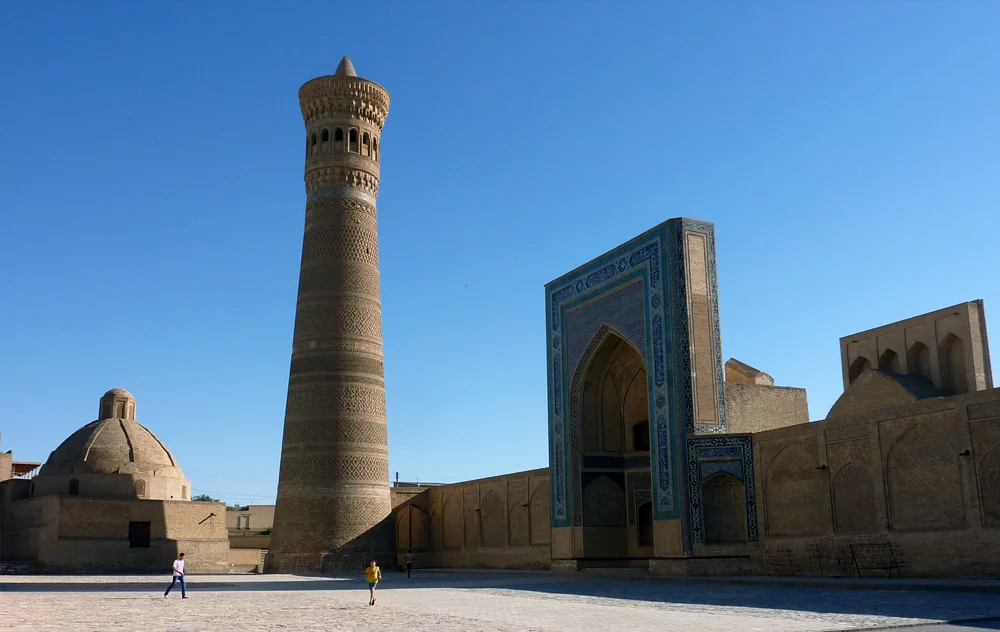
Bukhara is the city you can actually see on foot. The UNESCO old town is roughly one kilometre across and almost entirely car-free, which means a realistic Bukhara itinerary looks less like a tight schedule and more like a walking loop with coffee stops. This guide covers one, two and three days in the old town from a local operator's perspective — what to cover, how fast to move, and how much difference a second day actually makes.
Is One Day Enough for Bukhara?
One day in Bukhara works — far better than one day in most Silk Road cities. Because the major monuments sit within a 15-minute walk of each other, you don't lose time in taxis or cross-town transfers. Lyabi-Hauz, the Trading Domes, Poi Kalyan, the Ark Fortress and Chor Minor form a compact cluster you can circle in a single, slow loop.
The risk isn't logistics — it's pace. Bukhara rewards the traveller who sits down. Half the experience is the tea house at Lyabi-Hauz, the light on the brickwork of the Kalyan Minaret at different times of day, the quiet courtyards behind the main streets. A rushed one-day plan still ticks every box on the map, but you'll leave with photographs rather than memories.
One day is the right fit if you're on a tight overall schedule — a train day-trip, a one-night stopover between cities, or a short Uzbekistan loop. If you have the flexibility to add a second day without re-booking hotels in the next city, we'd always recommend it. For context on which sites are non-negotiable, see our top things to do in Bukhara.
1-Day Bukhara Itinerary
A realistic one-day plan, built around one walking loop through the old town:
- 09:00 — Lyabi-Hauz. Start at the pool. A slow coffee under the 400-year-old mulberry trees is the right way to begin a day in Bukhara.
- 09:45 — Trading Domes. Walk west through Toqi Sarrafon, Toqi Telpak Furushon and Toqi Zargaron. Covered 16th-century intersections, still full of merchants.
- 11:00 — Poi Kalyan. The Kalyan Minaret, Mosque and Mir-i-Arab Madrasah. Go inside the mosque courtyard; it's almost always quiet mid-morning.
- 12:30 — Lunch at a chaikhana near Lyabi-Hauz (plov, shashlik or a Bukhara-style salad).
- 14:00 — Ark Fortress. The last emir's citadel, raised on a millennium of earlier ruins. Allow 45 minutes.
- 15:30 — Bolo-Hauz Mosque. Across the square from the Ark. The wooden column portico is one of the most photographed sights in town.
- 16:30 — Chor Minor. A 15-minute walk east of Lyabi-Hauz. Small, strange, photogenic.
- 19:00 — Return to Lyabi-Hauz for dinner and the evening light on the water.
No taxis needed. The longest transfer in this plan is the walk to Chor Minor, which is 10 minutes through a residential neighbourhood that's pleasant in itself. The evening at Lyabi-Hauz is part of the itinerary, not an optional add-on — locals gather around the pool at dusk and it's one of the few places in Uzbekistan where the old town still feels properly lived-in after dark.
2-Day Bukhara Itinerary
Two days is what we'd recommend as a default. Day one follows the plan above, but unhurried — linger at the Trading Domes, spend more time inside the Kalyan Mosque courtyard, eat a long lunch.
Day two adds depth and steps outside the tourist loop:
- Ismail Samani Mausoleum. A 10th-century tomb in Samanid Park, west of the old town. The brickwork is arguably the finest in Central Asia — a geometric puzzle carved into raw fired clay. 15-minute walk or a short taxi.
- Chashma-Ayub. Next to the Samani mausoleum; the "Job's spring" shrine. Small, quiet, and home to a modest museum of Bukhara's water-supply history.
- Jewish Quarter. A quiet maze of narrow streets south of Lyabi-Hauz, home to the oldest Jewish community in Central Asia. The old synagogue is still active and can be visited respectfully.
- Summer Palace of the Last Emir (Sitorai Mohi Hosa). 4 km north of the centre, reachable by taxi. An eccentric early-20th-century blend of Russian and Bukharan architecture. Worth a half-day for the peacocks, the mirrored halls and the small museum of royal costume.
Two days also lets you re-visit the core sites in different light. The Kalyan Minaret at sunset, Lyabi-Hauz at breakfast with no crowds, the Ark just after opening when the courtyard is still empty — these moments are what separates Bukhara from a passport-stamp city.
3-Day Bukhara Itinerary
Three days turns the trip from a visit into an experience. Days one and two cover the plans above. Day three is where Bukhara opens up:
- Day trip to Nurata and the Kyzylkum Desert. A desert yurt camp with camel rides, a traditional dinner and a night under the stars — the most popular add-on from Bukhara. Can be done as a long day or an overnight.
- Day trip to the Chor Bakr necropolis. 7 km west of Bukhara. A city of Sufi tombs set in a quiet orchard. Often empty of tourists and one of the most atmospheric places in the region.
- A slow Bukhara day. A tea house morning, lunch at a family-run plov kitchen, a hammam session in a restored 16th-century bathhouse, and an evening concert of Bukharan Shashmaqam music in the Nodir Devon Begi madrasah courtyard.
Three days is also the point where the city stops being a checklist. You start recognising the same shopkeeper in the Trading Domes, noticing which chaikhana has the best plov at noon, figuring out the quiet back-street route between Poi Kalyan and the Ark. These small familiarities are what most travellers mean when they say Bukhara was their favourite city in Uzbekistan.
Travel Tips for Planning Your Trip
Best time to visit. April to early June and September to early November are ideal — warm, dry, and comfortable for long walks. Midsummer (late June–August) can exceed 40 °C at midday; start before 09:00, rest 13:00–16:00, and resume in the late afternoon. Winter is cold and very quiet, with short daylight hours but beautifully empty monuments.
How to get there. The Afrosiyob high-speed train links Tashkent, Samarkand and Bukhara. From Tashkent it takes roughly 3h 40min; from Samarkand around 1h 40min. Book ahead in high season — the trains fill up. Domestic flights exist but rarely save time door-to-door.
Getting around the city. Don't rent a car and don't plan around taxis. The old town is a walking zone. Yandex Go works for the outlying sites (Summer Palace, Chor Bakr) at around 20,000–40,000 UZS per ride. A private driver or a guided tour only makes sense if you're combining Bukhara with out-of-town day trips.
Where to stay. Inside or immediately adjacent to the UNESCO old town. A dozen boutique B&Bs operate in restored 19th-century merchant houses — small rooms around a tiled courtyard, breakfast on the terrace, an owner who will ring you a taxi. These are better value and closer to everything than modern hotels outside the old town.
Tickets and dress. Most monuments charge entry (around 25,000–50,000 UZS per site in 2026). Some take cards; carry cash for the rest. Dress modestly inside working religious buildings — shoulders and knees covered, and a headscarf for women inside the Kalyan Mosque and Bolo-Hauz.
If you want the full picture — seasonality, neighbourhoods, transport and how Bukhara fits into a multi-city trip — see our complete Bukhara travel guide.
Common Mistakes to Avoid
The most common mistake is treating Bukhara like Samarkand. Travellers arrive with a tight 4-hour plan, power through the headline monuments before lunch and leave feeling it was "smaller than expected." It isn't smaller — it's slower. Bukhara is built for lingering, and a 4-hour visit skips the half of the city that makes people want to come back.
Underestimating heat is the other recurring error. Even a compact walking itinerary will exhaust you if you try to push through a 40 °C afternoon. Use the long lunch break as a deliberate rest, not a race to the next site.
Finally, don't skip the Ismail Samani mausoleum because it's slightly outside the main loop. A 10-minute walk each way is a small price for the single most accomplished piece of brickwork in the region — and the park around it is a welcome break from the monument density of the centre.
Still deciding whether Bukhara earns the time? We wrote an honest take on whether Bukhara is worth visiting.
Want the walking route planned and the history filled in as you go?
Our full-day Bukhara City Tour follows the same one-day loop above, with a local guide, all entrance tickets handled, and transport to the outlying Ismail Samani complex.
Book the Bukhara City Tour →Related Articles

Odil has been guiding travellers through Uzbekistan's Silk Road cities since 2009. Born in Samarkand, he specialises in cultural heritage tours, homestay experiences, and off-the-beaten-path adventures in the Nuratau Mountains. Jahongir Travel is his family-run tour operator based in Samarkand. Learn more about us.