

Is Samarkand Worth Visiting? Honest Guide 2026
Short answer: yes — Samarkand is worth visiting, but not for the reasons tourists usually expect. This is an honest guide from a local tour operator based in the city. We'll cover what actually makes Samarkand special, what it doesn't do well, who should prioritise it, and who might skip it.
Is Samarkand Worth Visiting? The Short Answer
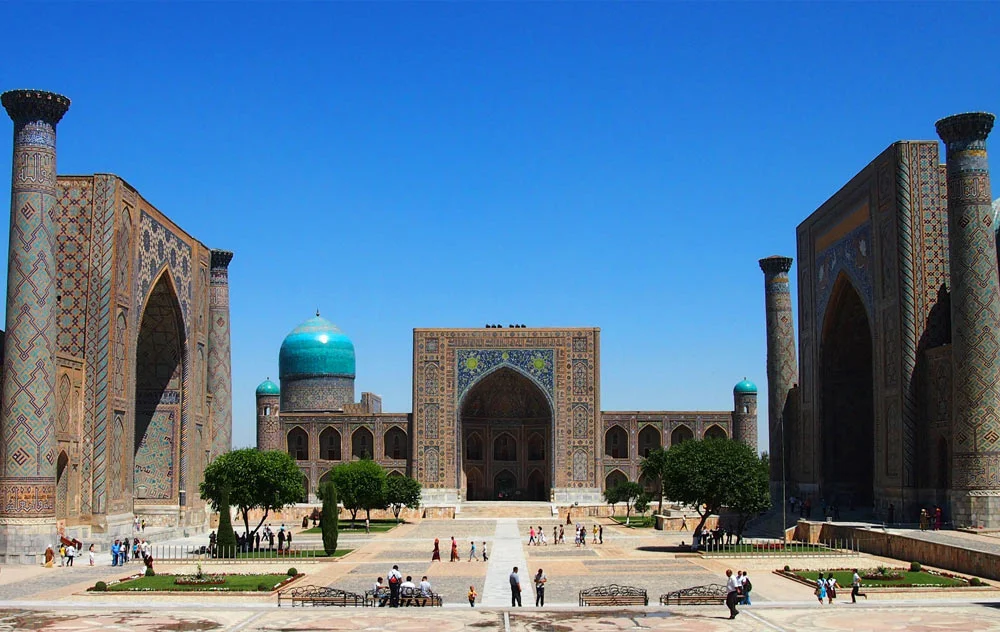
Samarkand is worth visiting for anyone interested in history, architecture, or the Silk Road. It holds the most concentrated set of Timurid monuments anywhere in the world, and the scale and tilework of sites like Registan are genuinely hard to see elsewhere.
It's not the right trip if you expect nightlife, luxury shopping, or a modern city experience. Samarkand is a heritage city — its pull is historical, architectural, and cultural, not urban.
For a concrete sense of what you'd actually do on the ground, see our guide to the top things to do in Samarkand. For timing, see how to spend 1, 2, or 3 days.
What Makes Samarkand Special
Three things separate Samarkand from other Central Asian cities.
Silk Road History
Samarkand has been inhabited for over 2,750 years. It was sacked by Alexander the Great in 329 BCE, rebuilt by every major empire that passed through, and became the capital of Timur's 14th-century empire — one of the most powerful states of the medieval world. Very few cities anywhere preserve this depth of continuous history in visible form.
The Silk Road isn't just a concept here. Siab Bazaar has operated in the same location for centuries. The Afrasiab Museum's 7th-century frescoes show ambassadors from China, Korea, and Persia on a single wall — an ancient United Nations. If that kind of history matters to you, Samarkand is one of the best places in the world to experience it.
Architecture
Registan Square is the one monument that lives up to every photograph. Three madrasahs from the 15th and 17th centuries face a central plaza, each with distinctive tilework and geometry. At golden hour, the facades glow turquoise and gold; at night they're illuminated.
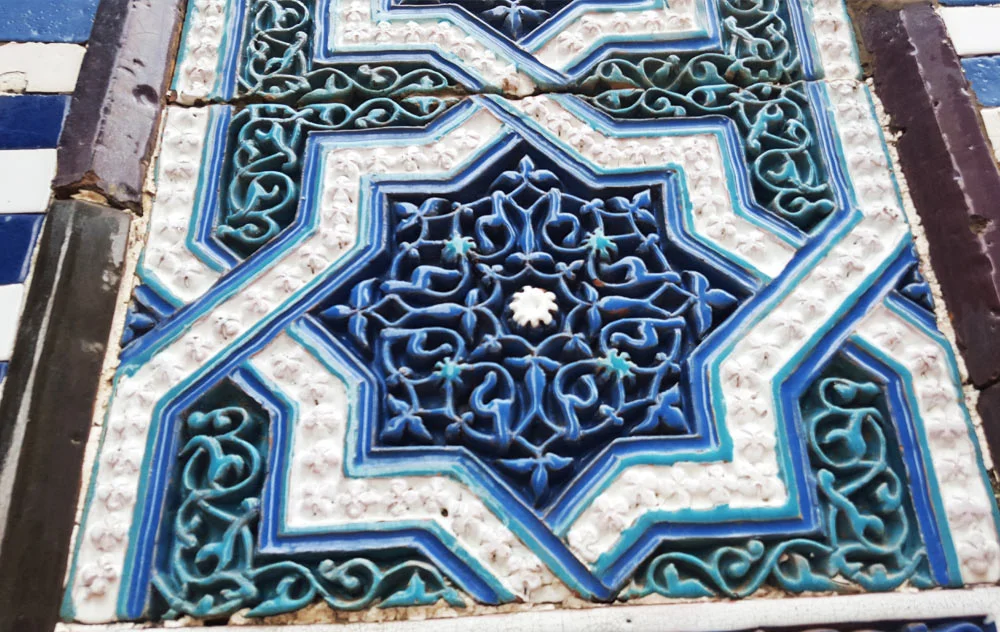
Beyond Registan, Shah-i-Zinda has the finest tilework in Uzbekistan — eleven mausoleums in a narrow avenue, with cobalt, turquoise, and gold calligraphy at arm's length. Gur-e-Amir (Timur's tomb) and Bibi-Khanym Mosque round out the headline monuments. Together they represent the apex of Timurid architecture.
Atmosphere
The old city feels genuinely old. The craftsmen at Siab still bake non bread the traditional way, Konigil village still produces silk-paper on wooden presses, and the Jewish Quarter has a 2,500-year-old community living next to a working synagogue. Samarkand is a heritage destination that is also still a living city — a rare combination.
Pros and Cons of Visiting Samarkand
Pros:
- World-class monuments. UNESCO World Heritage Site, three headline sights that are genuine bucket-list destinations.
- Affordable. Entry fees, food, and transport are inexpensive by Western or East Asian standards. A good guided day tour runs well under what you'd pay in Europe for equivalent quality.
- Visa-free for 90+ countries. Most EU, UK, US, Canada, Australia, Japan, and South Korea travellers enter visa-free for 30 days.
- Safe. Street crime is very low. Solo female travellers report feeling comfortable, especially in the old quarter during daytime.
- Authentic food. Samarkandi plov, non, shashlik, and dried fruit from Siab are all excellent and inexpensive.
- Easy transport links. The Afrosiyob high-speed train from Tashkent takes 2 hours 10 minutes and is reliable.
Cons:
- Limited nightlife. Bars and late-night culture are sparse. Evenings revolve around long dinners and lit-up monuments, not clubs.
- Summer heat. June–August midday temperatures routinely exceed 35 °C (95 °F). Outdoor sightseeing is uncomfortable in the peak hours.
- Language barrier. English is limited outside tourist-facing businesses. Uzbek and Russian dominate; a translation app or a guide helps.
- Restoration is visible. Some monuments are heavily restored rather than original — Bibi-Khanym Mosque especially. Purists may find that less satisfying.
- Repetition risk. After Registan, Shah-i-Zinda, Gur-e-Amir, and Bibi-Khanym, some travellers feel "monumented out" by day three. Good itinerary planning avoids this.
How Many Days Do You Really Need?
The honest answer depends on your pace and how much history you want to absorb. One day is enough for the headlines; two days is the sweet spot for most travellers; three days lets you add depth or day trips.
For a detailed breakdown of what fits into each option, read our Samarkand itinerary guide for 1, 2, or 3 days. If you're comparing to the other major Silk Road city, see Samarkand vs Bukhara.
Who Should Visit Samarkand
- First-time Central Asia travellers. Samarkand is the best single-city introduction to the region — the scale, history and architecture are unmatched.
- History and architecture enthusiasts. Timurid architecture peaks here. If you've liked Granada, Isfahan, or Istanbul, Samarkand belongs on the list.
- Photographers. Registan at sunrise, Shah-i-Zinda tilework in morning light, blue domes against desert sky — visually, it delivers.
- Slow travellers. If you want to linger at monuments, eat long lunches, and talk to artisans, Samarkand rewards that.
- Silk Road itinerary travellers. Most multi-country Silk Road trips (Iran – Uzbekistan – Kyrgyzstan, or similar) count Samarkand as a highlight.
Who Might Skip It
- Travellers on extremely tight schedules. If you have under 24 hours in Uzbekistan, fly straight to Tashkent or skip the country.
- Luxury-only travellers. Five-star hotel options exist but are limited compared with Europe or the Gulf. Boutique B&Bs are often better than big-brand hotels here.
- Nightlife-focused tourists. If a trip's success depends on bars and clubs, Samarkand won't satisfy.
- Travellers uninterested in history. If monuments and museums bore you, the Silk Road theme won't save the trip. Bukhara and Khiva face the same issue.
Still gathering information before you decide? Our complete Samarkand travel guide pulls the itinerary, best time, where-to-stay and getting-around notes into one place.
Final Verdict
Samarkand is worth visiting. For the right traveller — someone drawn by history, architecture, or the Silk Road — it's one of the most rewarding destinations in Central Asia. You leave remembering specific things: the scale of a single tile pattern, a piece of warm Samarkandi non handed over at the bazaar, the evening light on Registan when the crowd has thinned.
It's not a destination that sells itself through marketing clichés, and that's part of the appeal. What you get is a heritage city that still functions as a city, at prices that make longer trips possible. If your trip has room for it, go. If your trip barely has room for it, cut somewhere else and keep Samarkand in.
If you decide to visit, our full-day Samarkand city tour covers all five headline monuments with a local guide and private transport (entrance tickets, a few dollars per site, are paid on the day) — designed for travellers who want the deep context without the logistics.
Decided Samarkand is the right call?
Our full-day Samarkand City Tour covers Registan, Gur-e-Amir, Shah-i-Zinda and Bibi-Khanym with a local guide, private transport and all entry tickets handled.
Book the Samarkand City Tour → · See all tours from Samarkand →Related Articles
Odil has been guiding travellers through Uzbekistan's Silk Road cities since 2009. Born in Samarkand, he specialises in cultural heritage tours, homestay experiences, and off-the-beaten-path adventures in the Nuratau Mountains. Jahongir Travel is his family-run tour operator based in Samarkand. Learn more about us.