

Samarkand Itinerary: 1, 2 or 3 Days | Jahongir Travel
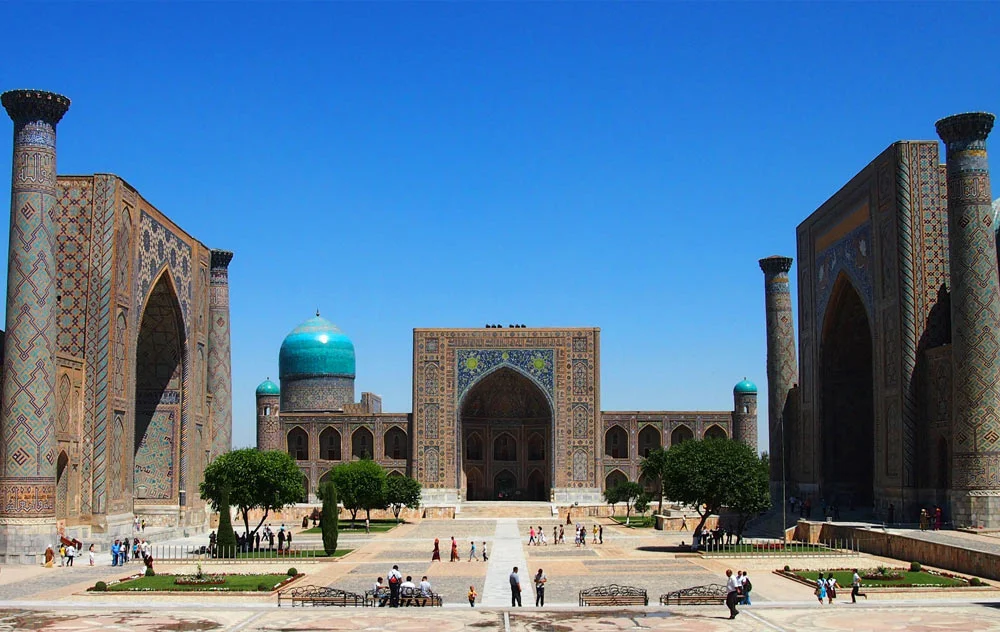
Samarkand rewards the time you give it. One day is enough to see the headline monuments; two or three days let you understand why travellers return. This Samarkand itinerary covers all three options from a local operator's perspective, with practical timing, transport and where-to-stay notes for each.
Is One Day Enough for Samarkand?
Technically yes — all five of the headline monuments sit within 2–3 km of each other and a determined traveller can cover them in a single day. But you'll be moving fast, queuing for tickets, and photographing more than exploring. For a list of what those headline sites are, see our top things to do in Samarkand.
Keep in mind that distances between major attractions are manageable but not always ideal for walking in hot weather. In summer, temperatures can exceed 35 °C (95 °F), which makes it harder to move quickly between sites without building in rest stops.
One day works best for travellers who want a quick overview or are passing through Uzbekistan on a tight schedule — a long layover, a train day-trip from Tashkent, a single-city add-on to another trip. If you enjoy exploring at a relaxed pace, taking photographs, or learning the stories behind each monument, you'll likely feel rushed. In that case, plan for two days.
If one day is what you have, keep the plan tight and consider a guided Samarkand city tour that handles transport and buying the tickets (entrance fees paid on the day) so you spend the time seeing, not queuing.
1-Day Samarkand Itinerary
A realistic one-day plan, ordered for light and crowds:
- 08:30 — Shah-i-Zinda. Start here when it's empty. The tilework inside the 11 mausoleums is the best in Uzbekistan.
- 10:00 — Bibi-Khanym Mosque. 10-minute walk south. 30 minutes is enough.
- 10:45 — Siab Bazaar. Right next door. Try warm Samarkandi non and dried apricots. Good snack stop.
- 12:30 — Lunch at a chaikhana near Registan (plov or shashlik).
- 14:00 — Gur-e-Amir. Timur's tomb. 20–30 minutes indoors.
- 15:00 — Registan Square. Walk the plaza, enter each of the three madrasahs, climb the Ulugh Beg minaret if open.
- 19:30 — Return to Registan for the illuminated facade or the light-and-sound show (seasonal).
Take one taxi: Registan → Gur-e-Amir is walkable (10 min) but after a full day it saves legs.
Plan the day around the light. Morning is perfect for Shah-i-Zinda (empty corridors, soft side-light on the tilework). Midday is fine for the interior-heavy stops like Gur-e-Amir and Bibi-Khanym. Late afternoon and evening are when Registan looks its best — the three madrasahs face east, so the low sun bathes the facades.
For lunch near Registan, look for a chaikhana serving plov — Samarkand-style plov uses yellow carrot and a specific layered technique. Samsa from a tandoor is the quick alternative. In warmer months, using Yandex Go for taxis between major stops saves energy more than money; rides are typically 15,000–30,000 UZS.
2-Day Samarkand Itinerary
Two days is the sweet spot. Day one stays roughly the same as above, but unhurried — linger longer at Shah-i-Zinda, spend an hour at Siab, eat properly.
Day two adds depth:
- Afrasiab Museum. The ruins of the pre-Timurid city, with 7th-century Silk Road frescoes. Most tourists skip this; it's a mistake.
- Ulugh Beg's Observatory. A Timurid prince's 15th-century astronomical sextant. 30-minute taxi north of the centre.
- Konigil Village. The Meros paper mill produces silk-paper the same way it was made a thousand years ago. Good workshop visit; you can make your own sheet.
- Jewish Quarter near Siab. A 2,500-year-old community; Gumbaz Synagogue is still active.
Two days also lets you eat better — dinner at a proper local place rather than grabbing something between sites.
One of the biggest advantages of two days is the ability to revisit key locations at different times. Registan has a completely different atmosphere in the evening, when it is illuminated and the plaza is much quieter than at midday. A morning re-visit to Shah-i-Zinda in soft light, after seeing it once the day before, is worth the repeat.
3-Day Samarkand Itinerary
Three days is the version we'd recommend to anyone not on a tight schedule. Days one and two follow the plans above. Day three gives you options depending on what you're into:
- Day trip to Shahrisabz (Timur's birthplace, 90 km south over the Tahtakaracha pass). Ak-Saray palace ruins + Dorut Tilovat complex. A full day out.
- Day trip to a yurt camp in Kyzylkum Desert if you want something completely different — camel riding, a traditional dinner, a campfire under the stars.
- A slower Samarkand day — revisit Registan at sunrise for photos with no crowds, wander the old quarter, visit the Siab second-hand spice vendors, eat long lunches.
With three days, you can also plan visits around the best light for photography. Early mornings are peaceful and nearly empty — Registan at sunrise is one of the best photography opportunities in Central Asia. Sunsets create a warm glow over the blue tilework.
Three days removes the pressure from your schedule and leaves space for spontaneous discoveries — a quiet courtyard near the Jewish Quarter, a tea vendor at Siab who wants to explain the spices, a workshop in Konigil where you stay an extra hour to watch the paper-press work. These are the things that make travellers say they want to come back.
If you're debating whether to stay longer or move on to Bukhara, see our comparison: Samarkand vs Bukhara — which to visit.
Travel Tips for Planning Your Trip
Best time to visit. April–May and September–October are the most comfortable — warm days, cool evenings, blooming orchards or golden light. June–August is hot (35–40 °C midday); start early and rest at midday. Winter is cold and quiet; fewer crowds but shorter opening hours at some sites.
How to get there. The Afrosiyob high-speed train from Tashkent takes about 2h 10min and is reliable; book ahead in peak season. Domestic flights exist but the train is usually faster door-to-door. From Bukhara the train takes around 1h 40min.
Getting around the city. The old-town monuments are close to each other, but Samarkand is bigger than it looks. Yandex Go works locally for taxis — cheap, no negotiation needed. A private driver or guided tour makes sense if you want to cover outlying sites (Ulugh Beg's Observatory, Konigil) without hassle.
Where to stay. Stay in the old quarter, within walking distance of Registan — boutique B&Bs and smaller hotels there put you a few minutes from everything. Avoid the modern Sharq district unless you specifically want shopping malls.
Tickets and dress. Most monuments charge entry (around 40,000–80,000 UZS per site in 2026). Registan and Gur-e-Amir accept cards; carry some cash for the rest. Dress modestly inside Bibi-Khanym and Shah-i-Zinda — shoulders and knees covered, headscarf for women in some interiors.
If you're planning a broader trip to Uzbekistan, our full Samarkand travel guide covers seasonality, neighbourhoods, logistics and how Samarkand fits into multi-city routes.
Common Mistakes to Avoid
Many first-time visitors try to fit everything into a single day and end up tired and rushed by mid-afternoon. If you can, give the city two days — it's a small increase in cost for a much bigger improvement in experience.
Underestimating summer heat is the other common mistake. Even on a two-day plan, schedule indoor monuments (Gur-e-Amir, Bibi-Khanym interior) for 11:00–15:00 and save outdoor walking for early morning and late afternoon.
Finally, visiting without any historical context makes the monuments feel like pretty walls. Even a short audio guide on your phone, or reading a paragraph per site before you enter, changes the experience significantly. A local guide changes it more.
Not sure Samarkand is right for your trip? We wrote an honest guide on whether Samarkand is worth visiting.
Short on time and want to see everything on day one?
Our full-day Samarkand City Tour follows the exact 1-day itinerary above, with a local guide, private transport and all entrance tickets handled.
Book the Samarkand City Tour → · See all tours from Samarkand →Related Articles
Odil has been guiding travellers through Uzbekistan's Silk Road cities since 2009. Born in Samarkand, he specialises in cultural heritage tours, homestay experiences, and off-the-beaten-path adventures in the Nuratau Mountains. Jahongir Travel is his family-run tour operator based in Samarkand. Learn more about us.