💬 WhatsApp us — ask anything or use the form below
- ⭐ 4.4/5 on TripAdvisor (47 reviews)
- 📍 Local operator
- 💬 Direct WhatsApp
- 🔄 Flexible options
- 🗓 Free cancellation up to 24 hours before departure
Private tour — price per person depends on group size:
| 1 traveler | $150 / person |
| 2 travelers | $95 / person |
| 3 travelers | $80 / person |
| 4 travelers | $70 / person |
West of Khiva lies Karakalpakstan, a different Uzbekistan — flatter, emptier, and home to one of the most surprising art collections in the world.
The Savitsky Museum in Nukus holds the second-largest collection of Russian and Soviet avant-garde art anywhere, saved from destruction under Stalin by Igor Savitsky and hidden in this far corner of the country. Around it, the day takes in the Chilpik dakhma — a two-thousand-year-old Zoroastrian tower of silence on a hill above the Amu Darya — and the vast Mizdakhan necropolis, a city of the dead layered over many centuries.
It is a long day out of Khiva and back, about 180 km each way, and a complete change of subject from the Silk Road monuments — art, faith and the Karakalpak land.
A morning pickup in Khiva and the drive west across Karakalpakstan towards Nukus.
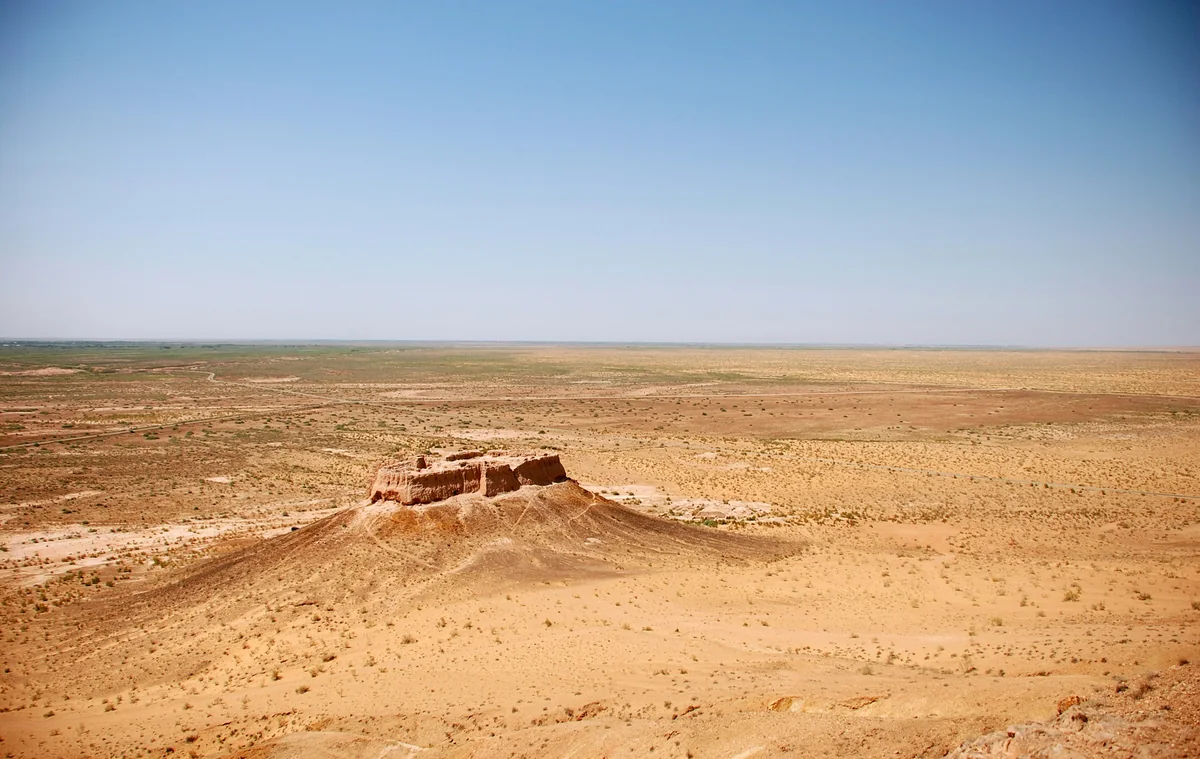
A stop at the Chilpik tower of silence, dramatic on its hill above the river.
Two hours or more in the museum — the reason most people make this trip.
The Mizdakhan necropolis on the way back, and the return to Khiva by evening.
Pickup and the drive west across Karakalpakstan towards the Amu Darya and Nukus.
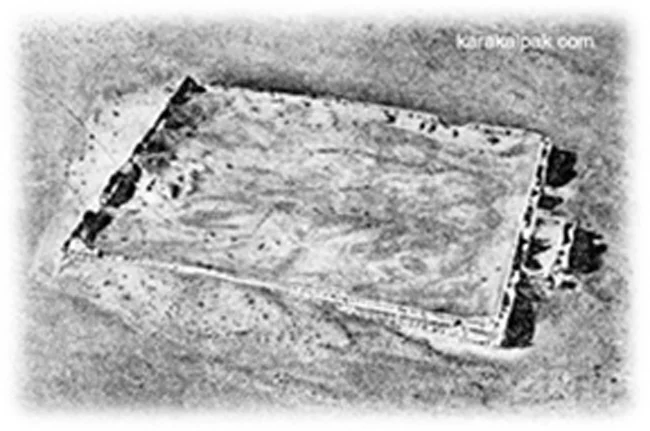
A ring of ancient mud-brick wall on a hill above the Amu Darya: Chilpik is a Zoroastrian dakhma, roughly two thousand years old, where the dead were once left exposed to the sky. A short climb gives sweeping views over the delta.
The Savitsky Museum: the second-largest collection of Russian and Soviet avant-garde art in the world, gathered and protected by Igor Savitsky far from Moscow's reach, alongside Karakalpak folk art and archaeology. Give it time — this is the highlight.
A break for lunch in Nukus before starting back.
A hillside covered in tombs and mausoleums spanning many centuries, beside the ruins of the ancient Gyaur-Kala fortress — one of the oldest and most atmospheric burial grounds in Central Asia.
The return across Karakalpakstan, arriving in Khiva in the evening.