

Fergana Valley Travel Guide: Uzbekistan's Craft Capital
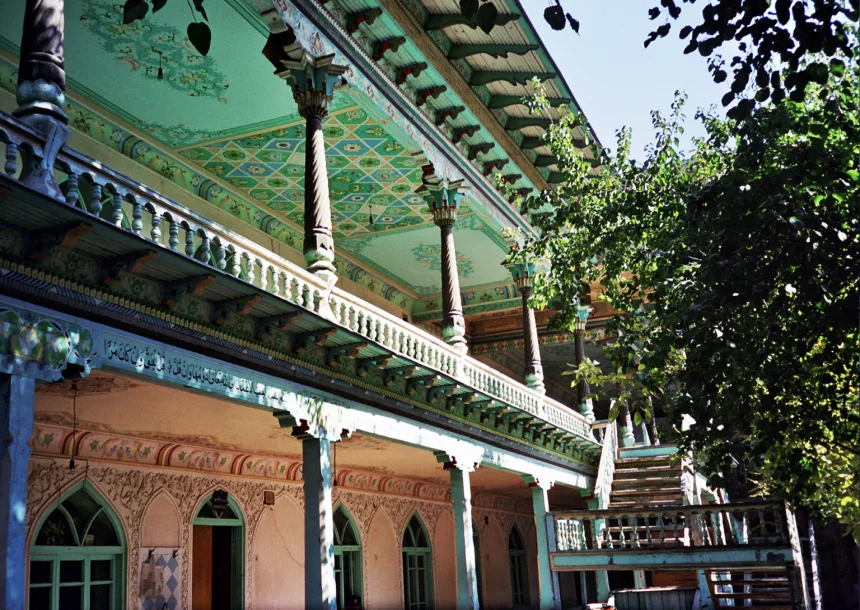
Most visitors to Uzbekistan make their way along the classic triangle: Tashkent, Samarkand, Bukhara. It is a magnificent route. But the travellers who venture east into the Fergana Valley come back talking about it differently — as the part of the trip that felt most alive. Lush, densely settled, and green in a way that surprises visitors expecting desert, the Fergana Valley is a world apart from the arid splendour of Samarkand's monuments.
This is Uzbekistan's most densely populated region and its agricultural heartland: a wide, flat basin ringed by the Tian Shan and Pamir mountains, watered by the Syr Darya river and fed by centuries of skilled irrigation. It is also the birthplace of Central Asia's finest crafts. The silk woven in Margilan, the ceramics fired in Rishtan, and the ikat fabrics sold in Fergana's bazaars represent living traditions that predate Islam and survived Soviet industrialisation. A Fergana Valley travel guide is, at heart, a guide to where Uzbekistan's soul is still being made by hand.
Cities of the Fergana Valley
The valley contains several significant cities, but three define any worthwhile visit.
Margilan: Uzbekistan's Silk Capital
Margilan is one of the oldest cities in Central Asia — some accounts place its founding over two thousand years ago — and for most of that time it has been synonymous with silk. The city sits at the heart of Uzbekistan's silk industry, and a visit to the Yodgorlik Silk Factory is unlike anything else in the country.
Yodgorlik (the name means "memory" in Uzbek) is not a museum piece. It is a working factory where you can watch artisans at every stage of the silk-making process: women unravelling cocoons in hot water to extract the fine thread, weavers operating hand-powered looms that date from the Soviet era but use techniques centuries older, and dyers working with natural pigments to produce the ikat patterns — known locally as atlaz — that distinguish Fergana silk from anything made elsewhere. The experience is loud, warm, and completely absorbing.
Margilan's Grand Bazaar is one of the largest in Uzbekistan. Unlike the tourist-oriented markets of Samarkand, this is a working commercial bazaar where local traders buy fabric in bulk and farmers sell produce from surrounding villages. The silk section alone — row upon row of shimmering atlaz in every colour — is worth the trip from Tashkent.
Rishtan: The Ceramics Capital
The small town of Rishtan, 35 km west of Fergana city, has produced ceramics for at least two thousand years. Its distinctive blue-and-white pottery — made from local red clay (surkh gil) and finished with a unique white kaolin slip (oq sopol) before being painted in cobalt and turquoise — is recognised as one of the finest ceramic traditions in the Islamic world. In 2018, Rishtan pottery was inscribed on UNESCO's list of Intangible Cultural Heritage.
The best way to experience Rishtan is to visit a master's workshop rather than simply buying from a shop. Rustam Usmanov is among the most respected potters in the valley, and his workshop welcomes visitors who want to watch the full process: clay being wedged and centred on a kick-wheel, vessels being shaped, the distinctive blue glaze being painted on by hand, and finished pieces emerging from the kiln. Rustam's family has been making ceramics in Rishtan for generations, and a conversation with him — through a guide — is as valuable as anything you will carry home.
For more on Uzbekistan's broader ceramics and craft traditions, see our guide to Uzbekistan traditional crafts near Samarkand, which covers the Gijduvan school near Bukhara and how to identify authentic handmade work across the country.
Kokand: The Forgotten Khanate Capital
Kokand is the least visited of the three main cities, and that is precisely its appeal. While Samarkand's monuments are magnificent, they are surrounded by tour groups. Kokand's centrepiece — the Khudayar Khan Palace — is usually quiet enough that you can walk its corridors in something approaching solitude.
Built in 1871 and originally comprising 113 rooms arranged around seven courtyards, the palace is one of the last surviving examples of 19th-century Khanate architecture. The tile work on the facade — intricate geometric patterns in blue, turquoise, and white — rivals anything in Bukhara for technical virtuosity. Inside, the restored rooms give a vivid sense of the court life of the Kokand Khanate, which at its height controlled territory stretching from present-day Kyrgyzstan to Afghanistan.
The city's Juma Mosque (Friday Mosque) is also worth visiting — a working mosque with a forest of carved wooden columns in its prayer hall. Kokand has a slightly melancholy, unhurried atmosphere that many travellers find more affecting than the more polished tourist cities.
Planning the full Silk Road circuit?
Our multi-day private tours cover Tashkent, Samarkand, Bukhara and Khiva with a local guide in each city; the Fergana Valley can be added on request. Quotes within 24 hours.
Best of Uzbekistan in 10 days → · 7 Mysterious Nights, 8 days →How to Get to Fergana Valley
The Fergana Valley is separated from the rest of Uzbekistan by a spur of the Tian Shan mountains, which gives the journey there part of its appeal.
By car: The most common route from Tashkent takes approximately 4.5 hours and crosses the Kamchik Pass at 2,267 metres. The road through the pass is well maintained and genuinely dramatic — the valley appears below you like a revelation after the mountain descent. This route is used by most guided tours and gives you the flexibility to stop in Kokand, Margilan, and Rishtan in sequence.
By train: A fast train (Afrosiyob) runs from Tashkent to Andijan in approximately 2 hours. Andijan is at the eastern end of the valley. This is faster but deposits you at the far end; you would then need local transport to reach Kokand and Margilan. The train works well as part of a return journey if you want variety.
With a guided tour: For most visitors, the most straightforward option is a two-day guided tour from Tashkent. A good guide will arrange the logistics of moving between cities, handle introductions at workshop visits, and provide context that makes the experience far richer than independent travel.
Fergana Valley Silk: What to Know Before You Buy
The Fergana Valley's silk tradition centres on ikat weaving — a technique in which threads are tie-dyed in complex patterns before being woven, creating the characteristic slightly blurred, haloed edges that distinguish atlaz fabric from anything machine-printed. The process is extraordinarily labour-intensive: dyeing the thread alone for a single metre of fabric can take days.
How to identify authentic hand-woven silk:
- Examine the reverse: Genuine hand-woven atlaz has a clearly visible weave structure on the back. Machine-made fabric is identical on both sides.
- Pattern edges: Authentic ikat has slightly soft, bleeding edges at pattern boundaries. A perfectly sharp edge suggests machine printing.
- Weight and drape: Real silk is cool to the touch, drapes fluidly, and is much lighter than synthetic alternatives.
- Burn test: If a vendor allows it, a small thread of genuine silk smells like burning hair; synthetic fabrics smell of burning plastic.
What to look for: Machine-woven silk scarves sold in tourist markets are widely available and affordable for everyday souvenirs. Genuine hand-woven atlaz scarves from workshop sources cost more but the difference in quality is immediately apparent when you hold both. For current prices, it is best to ask at the workshop or bazaar — rates fluctuate seasonally.
Fergana Valley Ceramics: A Buyer's Guide
Rishtan blue pottery has been exported along trade routes since medieval times, and today it fills every souvenir shop in Uzbekistan. The challenge is distinguishing the genuine article — hand-thrown and hand-painted by a master in Rishtan — from the mass-produced imitations made in industrial workshops elsewhere.
What to look for:
- Slight irregularity: Hand-thrown pieces will have minor variations in symmetry. Perfect uniformity is a sign of machine production.
- Brushwork: Authentic Rishtan painting shows individual brush strokes — you can see the painter's hand in the slight variation of line width. Printed decoration is perfectly uniform.
- The base: Turn a piece over. Genuine Rishtan pottery typically has a foot ring that was trimmed by hand; the clay at the base is the distinctive red-brown of local Fergana clay before the white slip is applied.
- Master's mark: Better workshops stamp or sign their work.
Shopping tip: Prices in Rishtan workshops are noticeably lower than in Tashkent or Samarkand souvenir shops selling the same work. Buying directly from the potter gives you better value — ask for current rates when you visit, as they shift by season and demand.
Packing fragile ceramics: Good workshops pack their pieces professionally in bubble wrap and cardboard. Carry purchases in your hand luggage; checked baggage is too rough. Airlines are generally tolerant of modestly oversized carry-on bags that contain wrapped ceramics if you explain what they are.
Best Time to Visit Fergana Valley
May–June is the finest time to visit. Apricot and cherry orchards are in blossom or early fruit, the mountains are still snow-capped, the valley is intensely green, and temperatures are mild — 20–28°C. The bazaars are full of fresh produce that simply does not travel: small, intensely sweet apricots, cherries the size of grapes, and the first melons of the season.
September–October brings the harvest season. The bazaars in this period are extraordinary — stacked with pomegranates, figs, persimmons, dried fruit, and the last melons of summer. The heat has broken, the light is golden, and the pace of life slows slightly in a way that makes conversation easier.
Avoid July and August if you can. Temperatures regularly exceed 40°C in the valley. The heat is intense and unrelenting, workshops reduce their hours, and the outdoor markets are much less pleasant to browse. If July–August is your only option, plan activities for early morning and late afternoon and rest during midday.
1 Day vs 2 Days in Fergana Valley
One day in Fergana Valley is possible but genuinely rushed. You can see one or two sites, but the valley rewards a slower pace — time to sit in a potter's workshop watching clay become a bowl, to browse a bazaar without hurrying, to have a proper meal in Fergana city rather than eating in a moving vehicle.
The ideal two-day itinerary:
Day 1: Depart Tashkent early and cross the Kamchik Pass to Kokand. Spend the morning at the Khudayar Khan Palace and Juma Mosque. After lunch, continue to Margilan — visit the Yodgorlik Silk Factory in the afternoon while the weavers are still working. Evening in Fergana city, which has decent restaurants and a pleasant tree-lined centre.
Day 2: Morning drive to Rishtan for a workshop visit — ideally arranged in advance so a master potter is expecting you. Afternoon in Margilan's Grand Bazaar for shopping. Return to Tashkent via the Kamchik Pass, arriving in the evening.
Overnight accommodation in Fergana city is worth it. The city has several comfortable guesthouses and small hotels, and waking up in the valley rather than arriving as a day tripper changes the quality of the experience.
Fergana Valley Food
Fergana Valley cuisine is distinct from the dishes of Samarkand and Bukhara, and food is a genuine reason to visit.
Kazan kabob is the dish most particular to the region: lamb slow-cooked in a heavy cast-iron kazan (cauldron) with potatoes and onions until the meat falls apart. The fat renders into the potatoes, creating something much more complex than the name suggests. Every family has its preferred kazan kabob restaurant, and opinions are fierce.
Non bread baked in a tandoor oven — round, dimpled, and slightly charred on the bottom — is the daily staple. The bread from Fergana Valley bakeries has a texture and flavour that differs from the non of other regions; local bakers attribute this to the water. Pick one up warm from a bakery in the morning.
Fresh fruit from the valley's orchards is in a different category from anything imported. In season, eat as much as you can: fresh figs split open and still warm from the tree, pomegranate juice pressed to order, and the small, intensely perfumed apricots that do not survive transport.
Shirin osh (sweet plov) is a Fergana speciality: rice cooked with dried apricots, raisins, and sometimes carrots in a manner that produces a dish midway between a savoury pilaf and a dessert. It is served at celebrations and is not always available in restaurants — your guide will know where to find it.
Plan Your Uzbekistan Trip
Tell us your travel dates and interests to discuss itinerary options and availability.
Discuss Your TripFrequently Asked Questions
Is Fergana Valley worth visiting?
Absolutely. It's Uzbekistan's most authentic craft region — silk weavers in Margilan and ceramic masters in Rishtan offer a completely different experience from Samarkand or Bukhara. The valley is also greener, more agricultural, and less touristed than the main Silk Road cities, which gives it an atmosphere all its own.
How do you get from Tashkent to Fergana Valley?
By car takes about 4.5 hours via the scenic Kamchik mountain pass at 2,267 metres. A fast train from Tashkent to Andijan takes about 2 hours and deposits you at the eastern end of the valley. Most guided tours travel by car to allow flexible stops along the route.
How many days do you need in Fergana Valley?
Two days is ideal — one day to visit Kokand's Khudayar Khan Palace and Margilan's silk factory, a second to explore Rishtan's ceramics workshops and the grand bazaar. One day is possible but rushed; you will leave wanting more time.
Odil has been guiding travellers through Uzbekistan's Silk Road cities since 2009. Born in Samarkand, he specialises in cultural heritage tours, homestay experiences, and off-the-beaten-path adventures in the Nuratau Mountains. Jahongir Travel is his family-run tour operator based in Samarkand. Learn more about us.