

Imam al-Bukhari Complex near Samarkand: A 2026 Visitor Guide
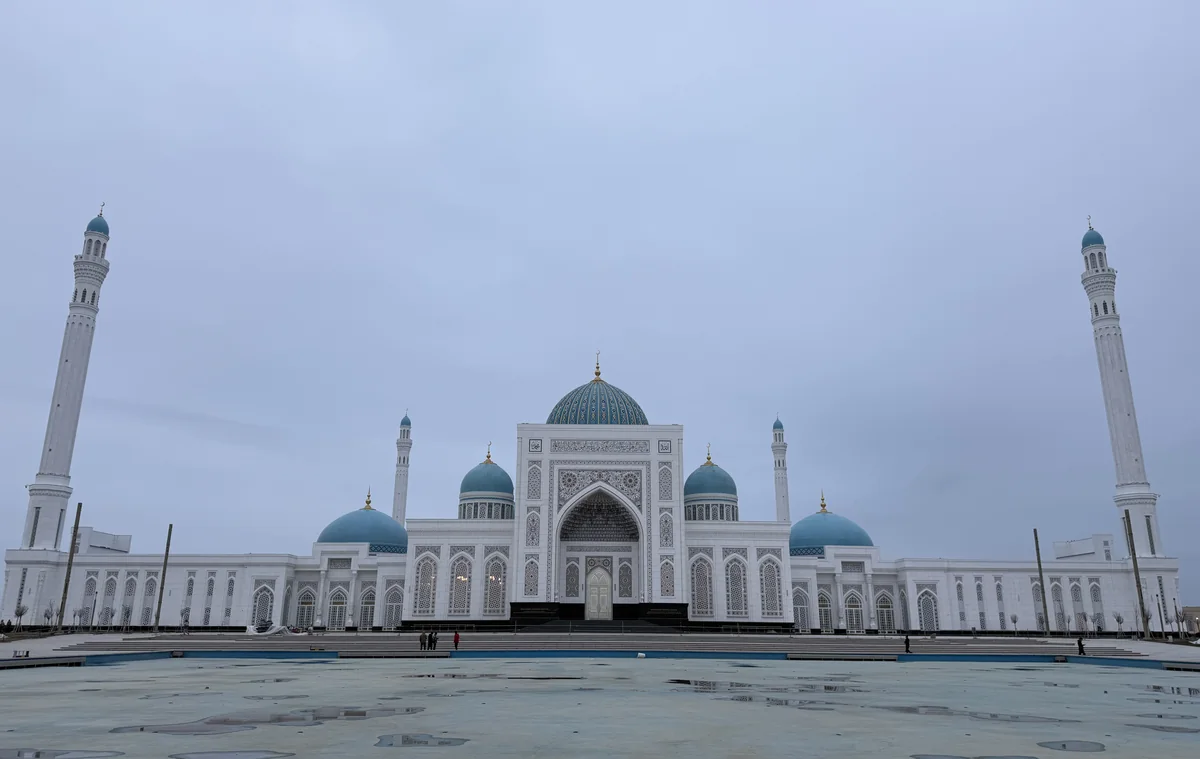
Just north-west of Samarkand, in the quiet village of Khartang, lies one of the most important pilgrimage sites in the Islamic world: the tomb of Imam al-Bukhari. The great hadith scholar spent his final days here and was buried in 870 CE. For centuries the site was a modest shrine; today it is a vast memorial complex that reopened in March 2026 after a major reconstruction.
This guide is for travellers who want to visit the complex respectfully and understand what they are seeing. It covers the history of the site, what the new complex offers, how to get there, and the etiquette required. The shrine is an active place of prayer and pilgrimage, and visitors of all faiths are welcome.
What is the Imam al-Bukhari Complex?
Imam al-Bukhari (810–870 CE) is the compiler of Sahih al-Bukhari, the collection of hadith regarded in Sunni Islam as the most authentic book after the Qur'an. He was born in Bukhara, travelled for many years across the Islamic world collecting narrations, and late in life settled at Khartang, near Samarkand, where he died on 1 September 870 CE.
A first mausoleum was built on the site in the 16th century during the Shaybanid period. In 1998, under President Islam Karimov, a memorial complex was constructed covering about 10 hectares, with a cube-shaped mausoleum topped by a 17-metre dome and a mosque for around 1,500 worshippers. That complex was expanded and rebuilt in a large-scale project beginning in 2021.
Visiting the complex from Samarkand?
Our half-day ziyarat tour covers the Imam al-Bukhari memorial at Khartang and the Makhdumi A'zam shrine at Dahbed with a private driver. About 4.5 hours, priced by party size.
Imam al-Bukhari half-day tour from Samarkand →The 2026 Reopening: What's New
The rebuilt complex was inaugurated on 19 March 2026 under President Shavkat Mirziyoyev. It now covers about 45 hectares — more than four times the previous size. The centrepiece is a marble congregational mosque that can hold more than 12,000 worshippers, with four minarets each 75 metres tall.
Other new features include a museum of nine pavilions dedicated to the life of Imam al-Bukhari and the science of hadith, a library, and a madrasa. The mausoleum itself retains its traditional form, with a cloth-wrapped cenotaph above and the crypt below. The site is designed to accommodate the growing number of pilgrims while preserving a contemplative atmosphere.
What You'll See: Mosque, Mausoleum and Museum
The main building is the congregational mosque, built of white marble and capable of holding over 12,000 people. Its four minarets rise 75 metres and are visible from a distance. The mausoleum is a separate, quieter structure: you enter, remove your shoes, and see the cenotaph covered in green cloth. The actual grave is in the crypt below.
The museum comprises nine pavilions that tell the story of Imam al-Bukhari's life, his travels, his method of authenticating hadith, and the significance of his work. Exhibits include manuscripts, maps of his journeys, and explanations of the science of hadith. Entry to the mosque and mausoleum is free; the museum charges a small ticket, paid on site.
Makhdumi A'zam: The Sufi Shrine Nearby
About 12 km from Samarkand, on the road back from Khartang, lies the shrine of Makhdumi A'zam (1461–1542), a leading master of the Naqshbandi Sufi order and founder of the Dahbediya school. The mausoleum and mosque were built in 1618 by order of Yalangtush Bahadur. The site also includes a khanqah with twelve domes and a deep carved wooden iwan, set among old plane trees.
It is a small, quiet site that pairs naturally with a visit to the al-Bukhari complex. Many tour itineraries combine the two, as they are on the same road and offer a contrast between the grand, modern memorial and the older, more intimate Sufi shrine.
How to Visit from Samarkand
The al-Bukhari complex is at Khartang village (also called Khoja Ismail), about 25 km north-west of Samarkand — roughly a 30-minute drive by car. The Makhdumi A'zam shrine at Dahbed is about 12 km from Samarkand, on the same road. A half-day private tour from Samarkand covering both sites takes about 4.5 hours, with a driver and optional guide.
Jahongir Travel runs such a tour, which includes transport, time at both sites, and the flexibility to explore at your own pace. The road is paved and the drive is straightforward. Taxis are also available from Samarkand, but a guided tour adds context and ensures you don't miss the key details.
Dress Code and Etiquette
The complex is an active place of worship and pilgrimage (ziyarat). Modest dress is required: shoulders and knees must be covered. Women should bring a headscarf to wear inside the mosque and mausoleum. Shoes are removed before entering both buildings. Photography of the buildings is fine, but ask before photographing any worshippers.
Visitors of all faiths are welcome. The atmosphere is respectful and peaceful. It is customary to walk quietly, especially near the mausoleum. If you see pilgrims praying, do not disturb them. The museum and library are less formal, but the same basic courtesy applies.
The Best Time to Visit
The complex is open year-round, but the best months are spring (April–May) and autumn (September–October), when the weather is mild. Summer can be very hot, especially in the open areas of the complex. Winter is cold but the buildings are heated. The site is busiest on Fridays and Islamic holidays; for a quieter visit, go on a weekday morning.
The museum and library are indoor spaces, so they are comfortable in any season. If you are combining the visit with Makhdumi A'zam, allow at least half a day. The light is best for photography in the late afternoon, when the marble of the mosque glows in the low sun.
Frequently Asked Questions
Is the Imam al-Bukhari complex free to enter?
Entry to the mosque and mausoleum is free. The museum charges a small ticket, which you pay on site. There are no advance booking requirements for general entry.
How far is the complex from Samarkand?
It is about 25 km north-west of Samarkand, in the village of Khartang (also called Khoja Ismail). The drive takes roughly 30 minutes.
Can I visit both the al-Bukhari complex and Makhdumi A'zam in one trip?
Yes. The Makhdumi A'zam shrine at Dahbed is about 12 km from Samarkand, on the same road as Khartang. A half-day private tour can easily cover both sites.
What should I wear to visit the complex?
Modest dress is required: shoulders and knees must be covered. Women should bring a headscarf. Shoes are removed before entering the mosque and mausoleum.
Is photography allowed inside the complex?
Photography of the buildings is fine. However, ask for permission before photographing any worshippers, as it is a place of active pilgrimage.
When was the complex rebuilt?
A large-scale reconstruction began in 2021 and the complex reopened in March 2026, inaugurated on 19 March 2026. It now covers about 45 hectares.
What is the significance of Sahih al-Bukhari?
Sahih al-Bukhari is the most authoritative hadith collection in Sunni Islam, regarded as the most authentic book after the Qur'an. It contains about 2,602 unique hadith, compiled over sixteen years from more than 600,000 narrations.
Related Articles
Odil has been guiding travellers through Uzbekistan's Silk Road cities since 2009. Born in Samarkand, he specialises in cultural heritage tours, homestay experiences, and off-the-beaten-path adventures in the Nuratau Mountains. Jahongir Travel is his family-run tour operator based in Samarkand. Learn more about us.