

Urgut Bazaar, Samarkand Paper & Silk Carpets: A Craft-Lover's Day from Samarkand
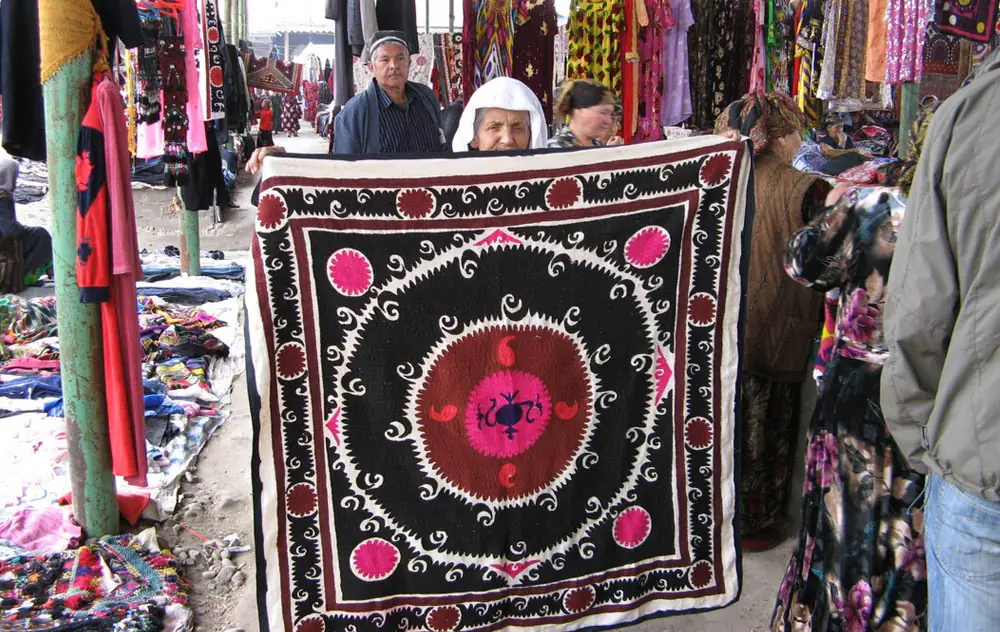
Just a short drive south-east of Samarkand lies a pocket of Uzbekistan where centuries-old crafts are still very much alive. Here, the open-air bazaar of Urgut hums with the trade of hand-embroidered suzani, while along the Siab river the ancient art of making paper from mulberry bark has been painstakingly revived. A little closer to the city, silk carpets are knotted by hand using natural dyes. For the traveller interested in the region's textile and paper heritage, this is a rewarding day's exploration.
Samarkand's Craft Country
The area around Samarkand has been a crossroads of craft traditions for centuries. The Silk Road brought not only goods but also techniques: papermaking from China, dyeing know-how from Persia, and embroidery styles from across Central Asia. Today, three places within easy reach of Samarkand allow visitors to see these traditions in action: the Urgut bazaar, the Meros paper mill in Konigil village, and a silk carpet workshop on the eastern edge of the city. Each offers a glimpse into a living craft, and together they make for a varied and unhurried day out.
Want to see the bazaar and the paper mill with a local?
Our private day trip from Samarkand covers Urgut bazaar, the Konigil paper mill and a silk carpet workshop, back by early afternoon. See the tour page for current prices by party size.
Urgut bazaar and Konigil day tour →Urgut Bazaar: The Suzani Capital
Urgut, a town roughly 40 km south-east of Samarkand (about an hour's drive), is home to one of the largest and most traditional open-air markets in the region. The bazaar spills across a dusty square, with stalls selling everything from fresh produce and spices to Soviet-era curiosities. But the real draw for craft lovers is the textile section, where silk and wool carpets, kalpak hats, and above all suzani — hand-embroidered textiles — are displayed in abundance.
Urgut is often called the capital of Uzbek suzani. Both new and antique pieces are available, their bold floral patterns stitched in silk thread on cotton or silk fabric. The bazaar feels far more local and less touristy than the Siab bazaar in central Samarkand, and bargaining is part of the experience.
The Best Day to Visit Urgut
The bazaar operates daily, but the textile and craft section is at its fullest on Sunday and Wednesday, and to a lesser extent on Saturday. Sunday is the busiest and best day, when the rows of suzani, carpets and hats are most extensive. On Monday and Thursday, the craft rows are largely absent, so these days are best avoided if textiles are your main interest. For a quieter, more local atmosphere, a weekday visit outside the main craft days can still be rewarding for fresh produce and general market life.
Konigil and the Revival of Samarkand Paper
A short distance from Urgut, on the edge of Samarkand along the Siab river, lies the village of Konigil. Here, the Meros paper mill is the only workshop in Uzbekistan still making paper by hand in the traditional way. Samarkand has been known for its paper since roughly the 8th-9th centuries; made from mulberry bark, it was smooth, durable and highly prized along the Silk Road, sometimes referred to as 'silk paper'.
Tradition holds that the knowledge of papermaking reached Samarkand around 751 AD, after the Battle of Talas, when Chinese prisoners revealed the craft. The skill was lost in the region by the 19th century, then revived in the 1990s by the Mukhtarov brothers, who founded the Meros mill. The mill has now been operating for more than 25 years with a team of about 20 artisans.
How Samarkand Paper Is Made
The process at Meros is entirely water-powered and follows ancient methods. Mulberry bark is first stripped and boiled until soft, then ground in a mortar to a pulp. The pulp is formed into a thin, even layer on a screen, pressed to remove water, and then dried. Finally, each sheet is polished smooth using animal horn or a piece of marble. Visitors can watch every stage and, if they wish, try making a sheet themselves. It is a quiet, absorbing place, and the finished paper — often used for calligraphy and painting — makes a distinctive souvenir.
The Silk Carpet Workshop
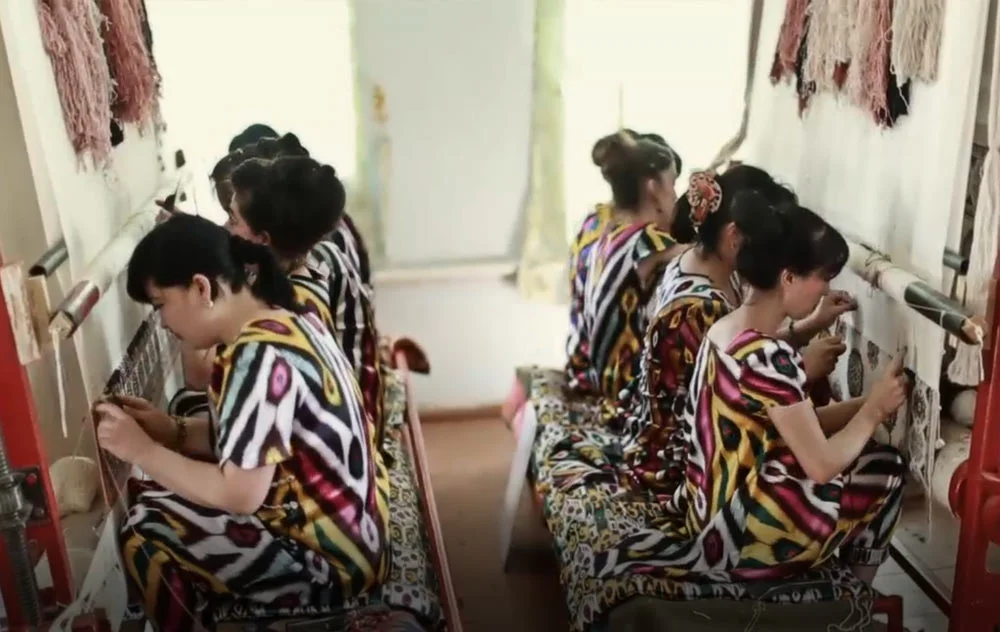
On the eastern edge of Samarkand, near the Shah-i-Zinda area and close to Konigil, a silk carpet workshop offers another insight into local craftsmanship. Here, weavers knot silk carpets by hand on traditional looms. The yarn is coloured with natural plant and mineral dyes, and the entire process — from silkworm cocoon to finished carpet — takes place on site. There is a showroom where visitors can see the carpets up close, but there is no obligation to buy. Watching the weavers at work is a quiet, meditative experience, and the quality of the craftsmanship is evident.
Making a Day of It
These three stops — Urgut bazaar, Konigil paper mill and the silk carpet workshop — can be comfortably combined in a single day from Samarkand. Jahongir Travel runs a private day tour that covers all three, departing around 8:00 AM and lasting roughly six and a half hours. The tour includes a private car and driver (no guide), so you can focus on the crafts without worrying about logistics. Whether you go independently or with a guide, the craft country around Samarkand offers a rewarding contrast to the city's monumental architecture.
Frequently Asked Questions
What is the best day to visit Urgut bazaar for textiles?
Sunday is the busiest and best day for the textile and craft section, which is also full on Wednesday and to a lesser extent Saturday. On Monday and Thursday the craft rows are largely absent.
How far is Urgut from Samarkand?
Urgut is about 40 km south-east of Samarkand, roughly a one-hour drive.
Can I try making paper at the Meros mill?
Yes, visitors can try making a sheet of paper themselves after watching the process from mulberry bark to polished sheet.
Is the silk carpet workshop a sales pitch?
No, visiting the showroom carries no obligation to buy. It is a chance to see the weaving process and natural dyeing.
How long does it take to visit all three places?
A combined tour typically takes about six and a half hours, including travel and stops at each site.
Is Urgut bazaar more local than Siab bazaar?
Yes, Urgut is less touristy and more local than the Siab bazaar in central Samarkand.
What is suzani?
Suzani are hand-embroidered textiles, often with bold floral patterns, made in silk thread on cotton or silk fabric. Urgut is known as the capital of Uzbek suzani.
Related Articles
Odil has been guiding travellers through Uzbekistan's Silk Road cities since 2009. Born in Samarkand, he specialises in cultural heritage tours, homestay experiences, and off-the-beaten-path adventures in the Nuratau Mountains. Jahongir Travel is his family-run tour operator based in Samarkand. Learn more about us.