

Uzbekistan's Traditional Crafts: Silk, Ancient Paper & the Urgut Bazaar
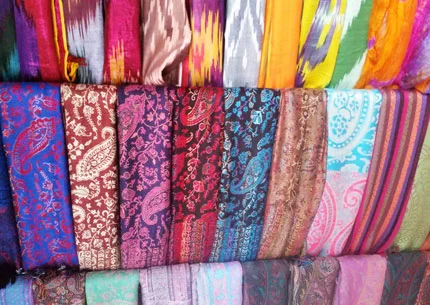
Uzbekistan has been a centre of craft production for over two thousand years. The Silk Road didn't just pass through Samarkand – it was here, in the workshops and bazaars of Central Asia, that the goods which made the route famous were made: silk, ceramics, paper, embroidery, and metalwork. These traditions are not museum pieces. They are still very much alive, practised by artisans whose families have been doing the same work for generations.
Within an hour of Samarkand, you can watch silk carpets being hand-knotted on centuries-old looms, see mulberry paper made by the same method Marco Polo would have recognised, and wander one of the most authentic bazaars in Central Asia. This guide covers the best craft experiences near Samarkand.
Samarkand Silk Carpet Factory
The Samarkand Silk Carpet Factory (also known as Khurjin) is one of the few remaining places in Central Asia where hand-knotted silk carpets are made on traditional vertical looms. A visit here is a lesson in patience: a skilled weaver ties between 600 and 1,200 individual knots per day. A large carpet can take two weavers 18 months to complete.
The factory is open for tours, and the weavers are accustomed to visitors watching their work. You can see the full process: raw silk threads being prepared, looms being set up with patterns, and finished carpets being displayed. The on-site showroom sells finished carpets – genuine hand-knotted Samarkand silk rugs represent a significant investment but are heirlooms that last centuries.
What to look for:
- Knot count: A quality Samarkand carpet has at least 60 knots per square centimetre. Run your hand against the pile – it should feel soft and spring back.
- Pattern origin: Traditional Samarkand designs feature geometric medallions and stylised flowers from Persian and Chinese influences.
- Certificate of authenticity: Ask for documentation if purchasing; it helps at customs.
Konigil Village: Samarkand Paper (Meros)
In the small village of Konigil, 15 km from Samarkand, artisans have been making paper from mulberry bark using a technique that has not fundamentally changed since it arrived from China in the 8th century. Samarkand paper – once exported along the Silk Road and used by scholars across the Islamic world – is so strong and durable that manuscripts written on it 1,000 years ago are still perfectly legible today.
The paper workshop at Konigil (run by the Meros foundation) gives visitors a complete demonstration:
- Harvesting: Inner bark of the mulberry tree is stripped, soaked, and beaten with wooden mallets until it forms a pulp.
- Sheet-making: A frame covered with fine mesh is dipped into the pulp suspension; as it drains, an even sheet forms.
- Pressing and drying: Sheets are pressed and sun-dried on smooth wooden boards.
- Polishing: Dried sheets are rubbed with a smooth stone to close the pores, giving the paper its distinctive texture.
The resulting paper is sold as notebooks, bookmarks, and rolled sheets – excellent, lightweight souvenirs. The workshop also sells paper decorated with hand-painted miniature designs.
Urgut Sunday Bazaar
The town of Urgut, 45 km southeast of Samarkand, hosts one of the most authentic large markets in Uzbekistan. While Samarkand's Siab Bazaar is known to tourists, Urgut's market serves primarily local buyers – farmers, craftspeople, and families from surrounding villages. The difference in atmosphere is immediate.
Urgut is famous across Central Asia for its suzani embroidery and silk ikat textiles. These are made by local women in the traditional manner: hand-embroidered on cotton or silk fabric using coloured threads in intricate floral and geometric patterns. A large suzani tablecloth represents weeks of work and is one of the finest traditional gifts from Uzbekistan.
What to Buy at Urgut
- Suzani embroidery – tablecloths, cushion covers, wall hangings; quality varies widely, so examine the stitch density carefully
- Ikat silk fabric – the swirling tie-dye patterns of Uzbek atlas silk; sold by the metre
- Handwoven cotton fabric (adras) – lighter-weight alternative to silk; beautiful patterns
- Dried fruits and nuts – Urgut's surrounding valleys produce some of the finest dried apricots, figs, and walnuts in Uzbekistan
- Ceramic work – plates, bowls, and decorative tiles in traditional Uzbek blue and white patterns
Bargaining tip: Prices at Urgut are negotiable. The first price is rarely the final price. Start modestly and negotiate from there. Buying multiple items from one seller gives you more leverage.
When Does Urgut Market Operate?
The main market day at Urgut is Sunday, when vendors from across the region gather. It starts around 7 AM and winds down by early afternoon. Visiting on a weekday will find a much smaller selection. Plan to arrive by 9–10 AM to see the market at its best.
Uzbek Ceramics: The Blue-and-White Tradition
Uzbekistan's ceramic tradition is one of the oldest in Central Asia, with workshops in Rishtan (Fergana Valley), Gijduvan (near Bukhara), and Samarkand itself. The deep cobalt blue and turquoise glazes of Uzbek ceramics are made using local mineral pigments; the designs – stylised flowers, geometric borders, and Arabic calligraphy – have changed remarkably little over the centuries.
Near Samarkand, look for ceramics at:
- Siab Bazaar in Samarkand city – large selection, touristy prices
- Urgut market – better prices, more authentic atmosphere
- Craft workshops on Tashkent Street – several small galleries with work by individual masters
What to Buy: A Practical Shopping Guide
| Craft | Best Place to Buy | Price Range | What to Look For |
|---|---|---|---|
| Silk carpet (hand-knotted) | Samarkand Silk Carpet Factory | Varies by size & knot count | High knot count; COA |
| Samarkand paper | Konigil workshop | Affordable | Natural fibre texture |
| Suzani embroidery | Urgut bazaar | Varies by size & handwork | Dense, even stitching |
| Ikat silk (atlas) | Urgut / Siab Bazaar | Per metre | Sharp pattern edges |
| Ceramics | Urgut / Rishtan workshops | Varies by size | Hand-painted details |
| Dried fruits | Any bazaar | Per kg | No added sugar; smell test |
Customs and Export Rules
Most craft items can be exported freely. However, a few important rules:
- Antiques over 100 years old require an export permit from Uzbekistan's Ministry of Culture – always ask the seller if an item is genuinely antique.
- Carpets: Modern hand-knotted carpets export freely; ask for a receipt showing the carpet was purchased in a registered shop.
- Silk and textiles: No restrictions on new items.
Book the Full Crafts Day Tour
Our Samarkand Crafts Day Tour visits all three of the main craft sites – the Silk Carpet Factory, Konigil paper workshop, and Urgut bazaar – in a single organised day trip from Samarkand. Your guide explains the history of each craft, handles logistics, and knows the best stalls for quality shopping at fair prices.
Odil has been guiding travellers through Uzbekistan's Silk Road cities since 2009. Born in Samarkand, he specialises in cultural heritage tours, homestay experiences, and off-the-beaten-path adventures in the Nuratau Mountains. Jahongir Travel is his family-run tour operator based in Samarkand. Learn more about us.