

The Kyzylkum Desert: A Travel Guide to Uzbekistan's Red Sands
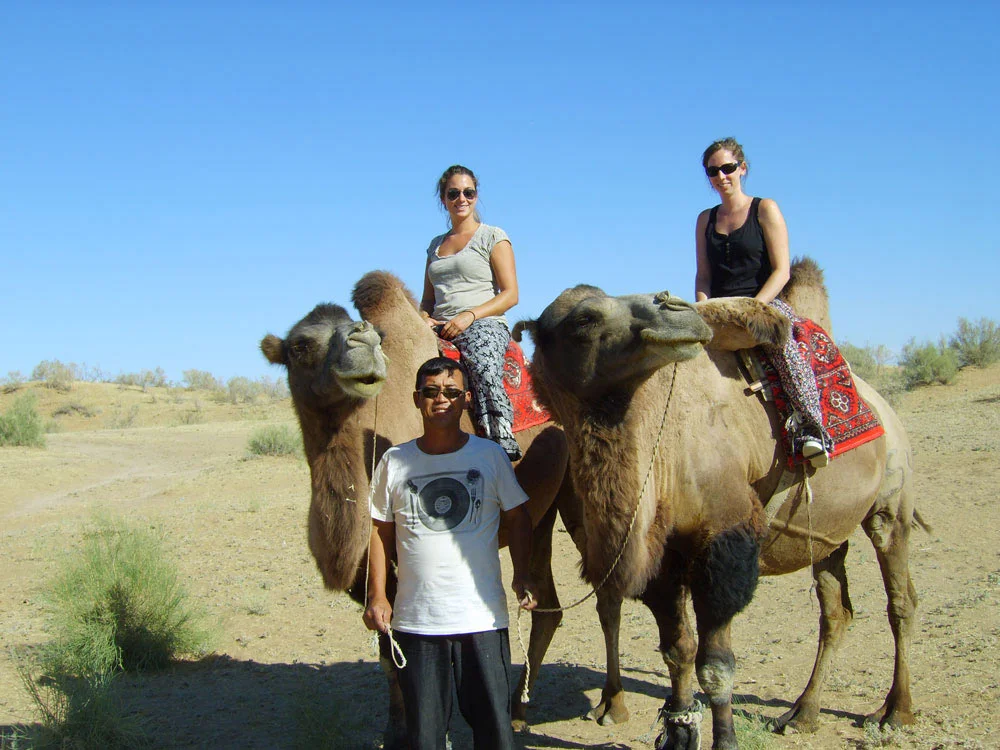
Between the great Silk Road cities of Samarkand and Bukhara lies a landscape most travellers do not expect: the Kyzylkum Desert, a vast expanse of red sand, scrub plains and open sky in the heart of Uzbekistan. For most visitors it is not a destination you set out to "conquer" — it is a place you pass through and stay a night in, usually on the way between the two cities. This guide explains what the Kyzylkum is, what you will actually see, and how to experience it.
What is the Kyzylkum Desert?
Kyzylkum means "Red Sand" in Turkic languages (kyzyl = red, kum = sand), named for the reddish tint of its soil. It is a major desert of Central Asia, spread across Uzbekistan, Kazakhstan and Turkmenistan, with the Uzbek part sitting between the Amu Darya and Syr Darya rivers. It is worth setting expectations: the Kyzylkum is not a continuous sea of towering Sahara-style dunes. Much of it is semi-desert — flat sandy plains, low scrub, and grassland that briefly greens in spring — with areas of genuine rolling dunes near Aydarkul and Nurata. What defines it is space, silence and big skies rather than dramatic sand mountains.
Want to sleep in the Kyzylkum?
The Aydarkul yurt camp tour puts the desert night on the road between Samarkand and Bukhara: lunch at the lake, a short camel ride, dinner at the camp and a traditional yurt. See the tour page for current prices by party size.
Aydarkul yurt camp tour: Samarkand → Bukhara, 2 days → · Bukhara → Samarkand → · Samarkand round trip →Where is it in Uzbekistan?
The Kyzylkum fills much of central Uzbekistan, north of the Samarkand–Bukhara road. The most accessible and rewarding corner for travellers is the southern edge near the town of Nurata and Aydarkul Lake, a long drive from Samarkand and a similar journey from Bukhara. This is the part nearly everyone visits, because it combines desert, a lake and the Nuratau foothills in one area.
What can travellers see there?
On a typical visit you can expect:
- Open desert plains and dune areas near Aydarkul, especially good in the low light of early morning and evening.
- Aydarkul Lake — a surprising sheet of blue water in the middle of the desert.
- Bactrian camels, kept at the desert camps near the lake.
- Birdlife and wildlife — the region supports gazelle reserves and migratory birds around the water.
- Dark night skies, far from any city lights.
Aydarkul Lake and yurt camps
For most travellers, the Kyzylkum is experienced through the Aydarkul yurt camps in the desert near the lake — the camp is a separate drive from the shore, so tours stop at the lake for lunch first. You take a short camel ride, have dinner prepared by the camp’s hosts, gather round the campfire when the weather allows, and spend the night in a traditional felt yurt. It is a simple, authentic overnight — not a luxury resort — and it is the single best way to actually feel the desert rather than just drive past it. See our Aydarkul Lake travel guide and our comparison of the best yurt camps in Uzbekistan.
The Nurata and Nuratau connection
The desert meets the mountains at Nurata, an ancient Silk Road town on the southern edge of the Kyzylkum, with a sacred spring complex (Chashma) and the remains of a fortress linked to Alexander the Great. Just beyond rise the Nuratau Mountains, where village homestays offer a completely different, greener experience — walnut groves, hiking and family hospitality. Many desert trips pass through Nurata, and travellers often pair the two. See our guide to eco-tourism in the Nuratau Mountains.
Camel riding, stargazing and desert landscapes
Three experiences define a Kyzylkum visit:
- Camel riding — a short ride of about 10 minutes on a two-humped Bactrian camel near the camp, in the late afternoon; the exact time depends on the season. First-timers welcome. See our camel riding in Uzbekistan guide.
- Stargazing — with almost no light pollution, the stars can be very clear on cloudless nights.
- Desert light — dawn and dusk are when the sand glows and the landscape is at its most photogenic; midday is flat and hot.
Best time to visit
- Spring (April–June) and autumn (September–November) are ideal — warm days, comfortable nights, and the lake pleasant for swimming.
- Summer (July–August) is very hot by day (often above 40°C) but the nights are clear; go for the stargazing, not the afternoons.
- Winter is cold and quiet, stark and beautiful for those who do not mind the chill.
Whenever you go, desert nights can be cool even after warm days, so bring layers. See our best time to visit Uzbekistan guide.
How to visit from Samarkand or Bukhara
The most practical way to experience the Kyzylkum is on a 2-day / 1-night yurt camp trip, which doubles as your transfer between the cities. You can travel:
- Samarkand → Yurt Camp → Bukhara
- Bukhara → Yurt Camp → Samarkand
- Samarkand round-trip if you are based there.
Because it sits between the cities, the route can replace the Samarkand–Bukhara transfer for travellers with one spare night — you reach your next city having seen the desert on the way. See Samarkand to Bukhara via the yurt camp.
Is it worth adding to your Uzbekistan itinerary?
If you have a spare night between Samarkand and Bukhara, yes — the Kyzylkum adds variety to a trip that is otherwise all cities and monuments, and a night in the desert is the kind of memory that stays with people. If your trip is tightly scheduled or you prefer hotel comfort, you can admire the desert from the train window instead. For everyone else, it is one of the easiest and most rewarding additions to an Uzbekistan route.
Experience the Kyzylkum on an overnight yurt camp trip
A 2-day / 1-night desert stay by Aydarkul Lake, doubling as your transfer between Samarkand and Bukhara.
See the Aydarkul yurt camp tourRoutes: Samarkand to Bukhara · Bukhara to Samarkand · Samarkand round-trip.
Frequently Asked Questions
Where is the Kyzylkum Desert?
In central Uzbekistan, north of the Samarkand–Bukhara road, extending into Kazakhstan and Turkmenistan. The most accessible part for travellers is the southern edge near Nurata and Aydarkul Lake, a long drive from Samarkand.
What does "Kyzylkum" mean?
It means "Red Sand" in Turkic languages (kyzyl = red, kum = sand), named for the reddish tint of its soil.
Can you visit the Kyzylkum Desert from Samarkand or Bukhara?
Yes — the most practical way is a 2-day / 1-night yurt camp trip near Aydarkul Lake, which doubles as your transfer between the cities. It runs Samarkand to Bukhara, Bukhara to Samarkand, or as a round-trip from Samarkand.
Are there sand dunes in the Kyzylkum Desert?
Yes, but not everywhere. Much of the Kyzylkum is semi-desert — flat plains and low scrub — with areas of genuine rolling dunes near Aydarkul and Nurata. It is defined by space and silence rather than continuous Sahara-style dunes.
What is there to do in the Kyzylkum Desert?
Have lunch by Aydarkul Lake (and swim in the warm season, when conditions allow), spend a night at a yurt camp in the desert nearby, take a short camel ride, stargaze on clear nights, and visit the Silk Road town of Nurata on the desert's southern edge.
When is the best time to visit the Kyzylkum Desert?
Spring (April–June) and autumn (September–November) are ideal. Summer days are very hot but the nights are clear; winter is cold and quiet. Nights can be cool even after warm days, so bring layers.
Odil has been guiding travellers through Uzbekistan's Silk Road cities since 2009. Born in Samarkand, he specialises in cultural heritage tours, homestay experiences, and desert trips to Aydarkul Lake and the Nuratau Mountains. Jahongir Travel is his family-run tour operator based in Samarkand. Learn more about us.